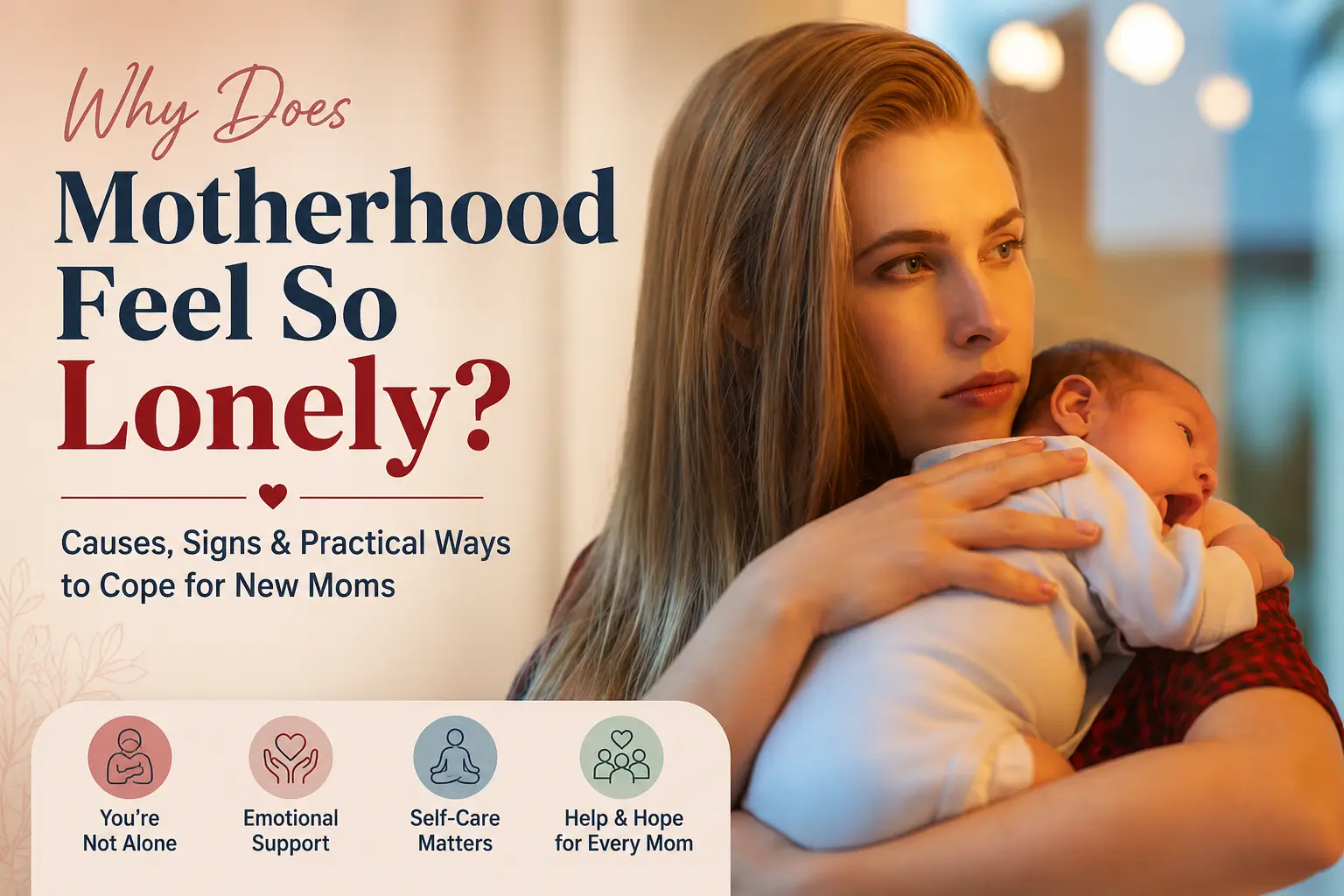
Many women expect motherhood to be filled only with happiness and love. But after childbirth, many new mothers are surprised by an emotion they never expected—loneliness.
If you feel isolated after becoming a mom, you’re not alone. Postpartum loneliness is far more common than most people realize.
On one side, a new baby brings love and excitement, but on the other side, many women are surprised by another emotion—loneliness.
While everyone celebrates the arrival of the baby, very few people ask how the new mother is feeling.
In this guide at ItsRanjana, we’ll explore why motherhood can feel lonely and share practical ways to cope with these emotions.
Top Reasons Why Motherhood Feels So Lonely
Loneliness in new parenthood can arise for several reasons. Before learning how to cope with loneliness, it’s important to understand what causes it.
There isn’t one single reason why new mothers feel lonely. In most cases, several emotional, physical, and lifestyle changes happen all at once.
Changing the entire routine overnight
A mother’s life is completely changed after a baby’s birth. Because you have endless responsibilities.
Your day starts and ends with caring for your baby. As your priorities change, you often have less time to meet friends, continue your hobbies, focus on your career, and make time for yourself.
Sleepless nights
This is one of the biggest challenges for every new mom. Along with this, constant night feeding and caring for the baby can leave you feeling exhausted and emotionally drained.
Hormonal Changes
After childbirth, estrogen and progesterone levels drop sharply, and this causes changes in your mood, energy, and emotions. It’s normal to experience mood swings, irritability, and unexpected tears because the body is gradually trying to adjust after pregnancy.
Everyone’s Focus on Baby
After the baby arrives, most of the attention naturally shifts to the newborn. You feel overlooked during this time, when you need the attention of their family and relatives, but they give it to your baby.
While the baby receives love and care, new moms quietly struggle with their own physical recovery.
Loss of Personal Identity
Many women think their identity is just about being a mom and feel their career, hobbies, and personal goals are left behind.
Unrealistic Expectations
Motherhood can feel overwhelming when relatives say things like, “We raised our children without any help while managing all the household work.” Hearing these comparisons may make new mothers question themselves or feel they aren’t doing enough.
Lack of Emotional Support
Emotional support plays an important role in a mother’s recovery after childbirth. But when you miss this from your family and partner, you start feeling lonely.
You May Also Like: A Simple Guide for New Moms to Balance Baby, Home, and You
Signs You May Be Experiencing Postpartum Loneliness
If you’re wondering whether you’re experiencing postpartum loneliness, these signs may help you recognize it.
- Isolated feeling even when people are around
- Missing friends and previous routines
- Emotionally disconnected feeling
- Avoid conversations
- Feeling that no one understands you
How to Cope With Loneliness After Having a Baby
When you become a mother for the first time, you need time to recover both physically and emotionally.
During this period, your hormones change rapidly. Encouragement and proper care are just as important as physical healing. But when you don’t get this support, your loneliness increases.
Recovery from this situation is very important for your mental and physical health and also for your baby. So, if you are in the same condition, you must know some important points of recovery:
Share Your Feelings with Your Partner
Your partner is often your biggest source of emotional support during this time. Give priority to your feelings and share with them what you are actually facing internally.
Stay Connected
Your family and friends are another important source of support. You should talk to them regularly. So, you will not feel lonely. Daily talk to your family and friends.
Accept Help
After delivery, you need rest and care. So, you don’t need to do everything by yourself. Ask your family to help you with baby care and other work.
Take Small Breaks
A break of at least 10 to 15 minutes can help you feel mentally and emotionally refreshed, ensuring you do not get overwhelmed even with increased responsibilities.
Prioritize Sleep When Possible
Take rest or sleep when your baby is sleeping. It not only supports physical recovery but also improves your emotional well-being.
Seek Professional Help
If you feel sadness and loneliness even after two weeks of delivery that affects your daily life or have hopeless thoughts, then you must share your conditions with a healthcare professional or mental health expert.
You May Also Like: Sleep Deprivation in Moms: Causes, Symptoms & Ways to Rest
How Family Members Can Support a New Mother
If your family wants to help you in motherhood, they need to know these important points. Here they are:
- Ask about your feelings and expectations of them
- Help you with household work and baby care
- Encourage you to take breaks
- Listen to your thoughts without judgment
- During this recovery period, avoid placing unnecessary emotional pressure on the new mother. Instead, offer reassurance, patience, and practical support.
Conclusion
Motherhood is one of life’s greatest journeys, but it can also be one of its loneliest seasons. Feeling isolated after childbirth doesn’t mean you’re a bad mother—it means you’re going through a major life transition.
With support from your partner, family, friends, and healthcare professionals when needed, these feelings can become easier to manage. Remember, taking care of yourself is just as important as taking care of your baby. A healthy, supported mother is one of the greatest gifts a child can have.
FAQs
Q1. Is it common for every mother to feel lonely after having a baby?
Yes, it’s a common feeling; it happens because of hormonal changes, sleepless nights, and a complete routine change.
Q2. What do moms want in their early days of parenthood?
In your early days as a new mom, you’re likely craving companionship, a little space for self-care, and someone who truly understands what you’re feeling.
Q3. How can a mom stop herself from feeling isolated?
You can connect with your family and friends, joining parenting and mom groups. This will help in recovering soon from isolated or sad feelings.
Q4. Is there any fixed time for postpartum loneliness?
Every mother’s experience is different in handling everything with a newborn. Some moms feel better after a few weeks, while some experience loneliness for several months.
Q5. Are postpartum loneliness and postpartum depression the same feelings?
No, both are different conditions. Loneliness after childbirth is common, but postpartum depression is a medical condition. It involves persistent sadness, loss of interest, and other symptoms that require professional treatment.