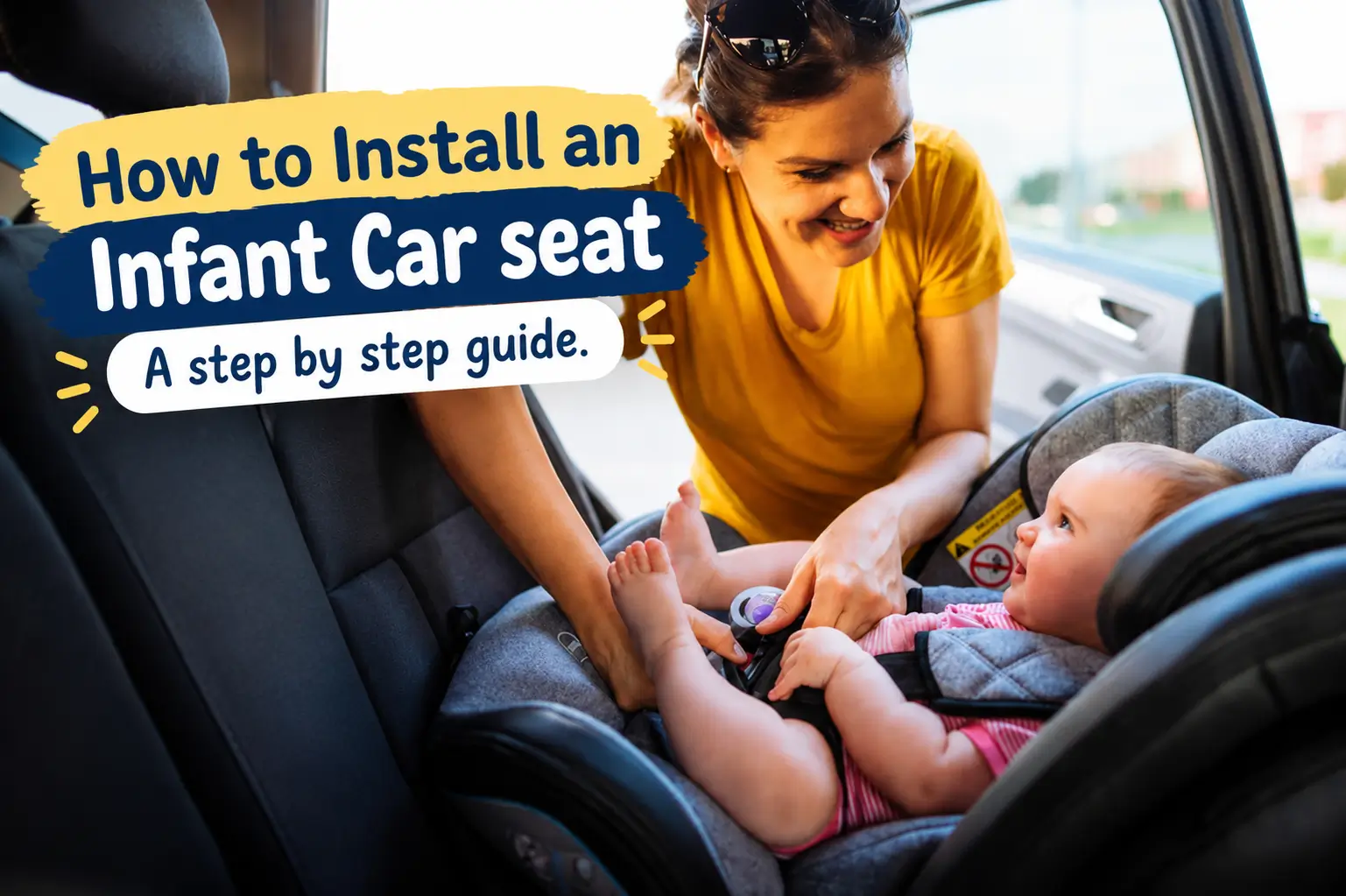
Nobody hands you the manual when you become a parent. Somehow you are expected to master straps, clips, and angles overnight.
One minute you are holding a sleeping baby, the next you are standing in a parking lot, staring at new buckles you didn’t know were there.
Take a breath and put the coffee down for a moment. This guide breaks it down clearly and simply, so you can follow it even half asleep.
Why Correct Installation Matters
Your car seat only protects your baby when it is installed correctly. Even a great seat will fail you if it is installed loosely or wrongly.
Imagine a sudden stop at a red light, with your bag slipping off the seat. Now imagine a bag of your baby, snug and comfortable, barely reacting to that same jolt. The small difference in how those two bags were installed is the factor that saved them.
According to pediatric guidelines, including those from the American Academy of Pediatrics, keep your baby rear-facing until they reach the seat’s maximum height or weight limit.
The back seat is generally the safest place for children. So remember to keep those two rules in the back of your mind as you prepare to install your seat.
What You Need Before You Start
You will need a rear-facing infant car seat suitable for your baby’s age and weight. Keep your car’s owner’s manual handy so you know where your vehicle’s anchor points are.
Keep your car seat’s manual handy, as every model works slightly differently. And lastly, keep your patience, because it may take two or three tries to get it right, even if you are an experienced parent.
Types of Infant Car Seats You Might Choose From
Not all infant seats work the same, so it helps to know your options.
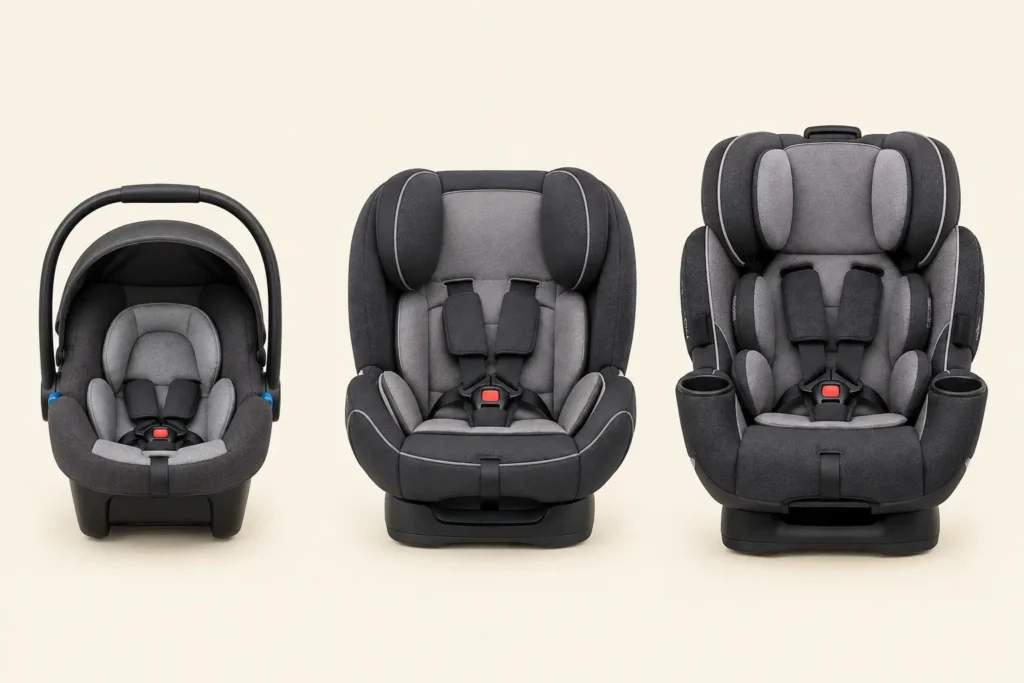
Infant Only Seats
Infant-only seats can be used from birth until a child reaches the seat’s specified height or weight limit. Some babies outgrow them within the first year, while others fit for longer.
Convertible Seats Used Rear Facing
A convertible seat can typically be used rear-facing until a child reaches the seat’s maximum height or weight limit, which varies by model. These seats are popular in India because they offer good value.
You can check the full guide about an infant car seat vs a convertible car seat.
All-in-One Seats
All-in-one seats grow with your child, from infant to booster. These tend to be much bulkier, but you pay for the value of buying only one seat. Whatever type you choose, always follow that seat’s installation instructions.
Step by Step: How to Install an Infant Car Seat
Installing an infant seat can be challenging but with the right manual and steps, it can be done right.
Step 1: Choose the Right Spot in Your Car
The back seat is generally the safest location. If your vehicle and car seat allow a secure center-seat installation, it can be an option. Otherwise, use a rear seating position where you can install it properly.
Step 2: Decide Between LATCH and Seat Belt
Depending on your country and vehicle, your car may have LATCH, ISOFIX, or another compatible anchorage system. LATCH stands for lower anchors and tethers for children.
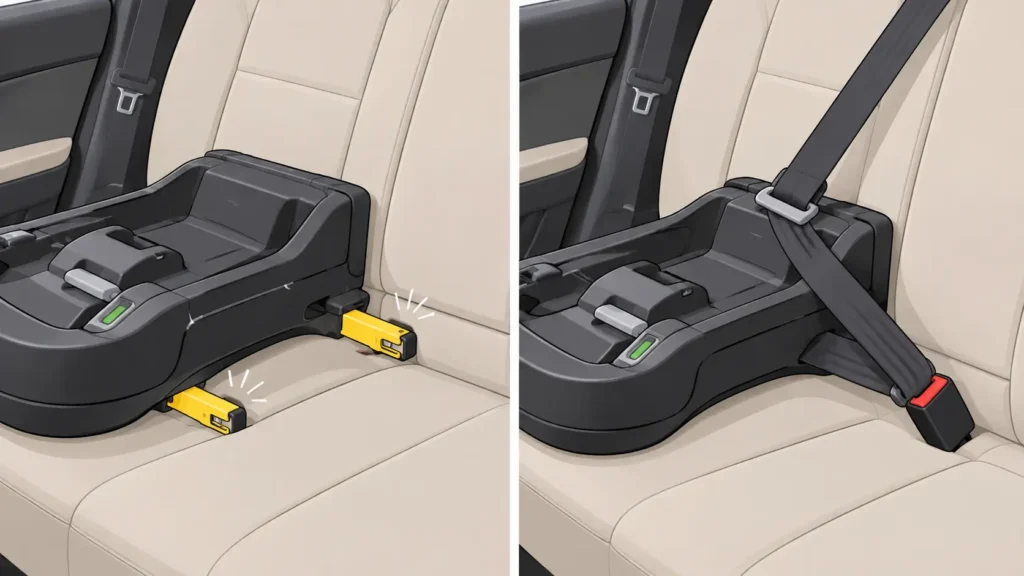
Depending on the seat and vehicle, you may install it using the LATCH system or the vehicle seat belt. Follow your car seat manufacturer’s instructions on which method to use.
Choose whichever method your car seat manual recommends first, but you should know that both are safe when installed tightly and correctly.
Step 3: Recline the Seat to the Correct Angle
Your baby’s head should never flop forward onto their chest. Set your infant seat to the recline angle specified by the manufacturer to help prevent your baby’s head from falling forward.
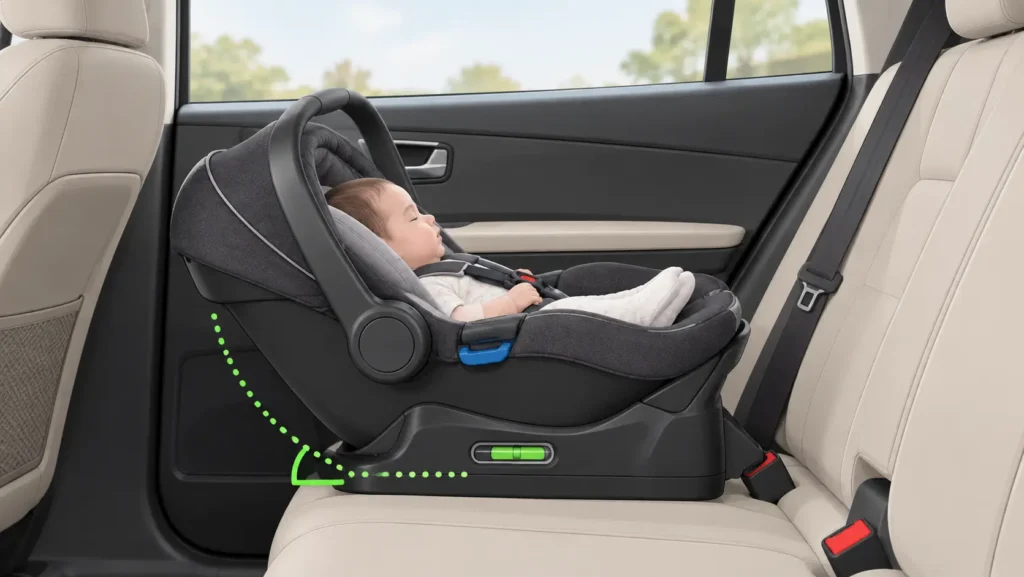
Check whether the seat has a built-in level indicator on the base. Adjust the recline using the foam wedge or adjustable foot if your seat has one. The right angle will help your child breathe comfortably throughout the ride.
Step 4: Secure the Base Tightly
Press the base firmly into the vehicle seat, then tighten the LATCH straps or seat belt according to the manufacturer’s instructions.
Thread the LATCH straps or the seat belt into the correct path. Tighten all straps until there is almost no slack.
Test this by firmly grabbing the base near the belt path. Lean your whole body on it and see if it gives.
Step 5: Do the One Inch Wiggle Test
Grip the seat near the belt path or where the LATCH strap attaches. Shake it side to side and front to back. Check for movement at the belt path according to your car seat manufacturer’s instructions.
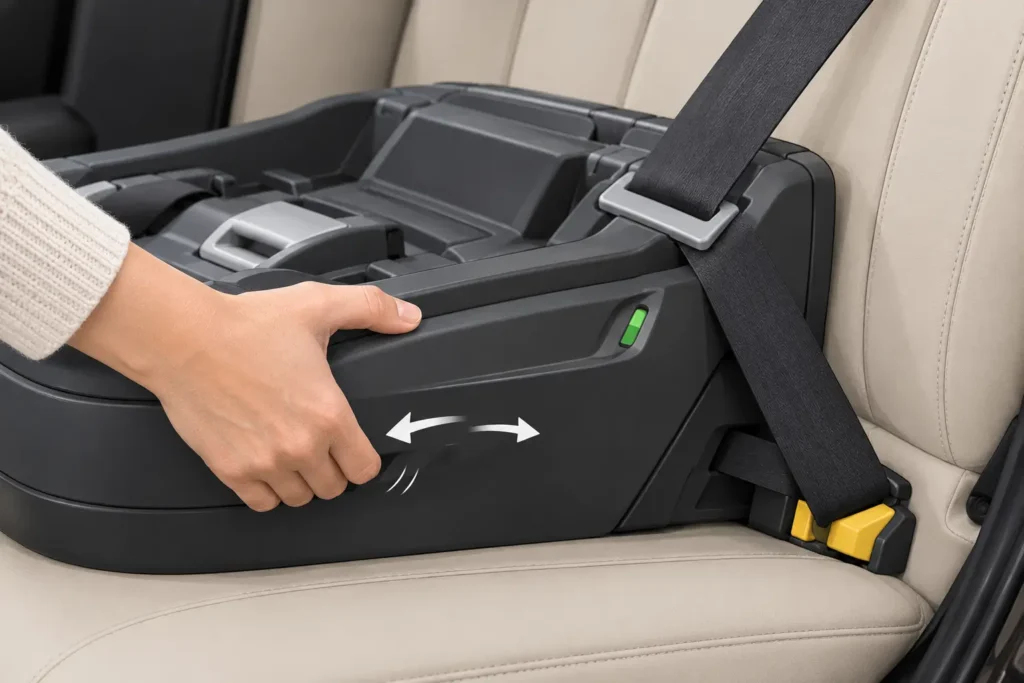
If the seat moves excessively, reinstall and tighten it as directed. As a general check, the seat should not move more than about 1 inch side-to-side or front-to-back when tested at the belt path. This is only one part of checking a proper installation.
Step 6: Place Your Baby in the Seat
Lay your baby onto the seat, with no bulk under them. Make sure the chest clip is at armpit height, and not over their belly.

Tighten the harness so it fits snugly against your baby with no slack. At the shoulders, you should not be able to pinch any excess webbing. If your baby fusses slightly while installing, this is normal.
Step 7: Do a Final Safety Check
Do one final check of the seat’s level indicator before you drive off. Make sure that the harness is flat and not twisted.
Double-check that the seat passes the one-inch wiggle test. Drive around the block to feel reassured, and notice how your baby settles in as the car moves.
You May Also Like: How to Choose a Baby Stroller That Actually Works for You
Common Mistakes to Avoid
These are some common mistakes people make generally but it may be harmful if you didn’t take care of it.
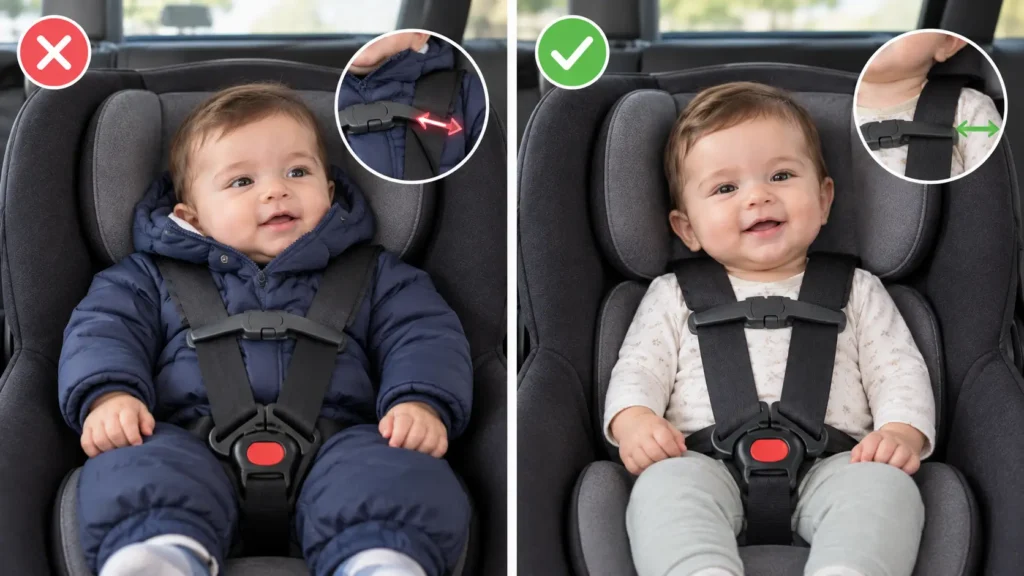
- Loose harness straps are one of the most common mistakes.
- An overly upright recline angle can cause your baby to slouch forward.
- Do not use LATCH/ISOFIX and the vehicle seat belt together unless the car seat and vehicle manufacturers specifically permit that combination.
- Bulky winter jackets under the harness can create extra slack, even if they seem warm and cozy.
- Skipping the manual because you know what you are doing rarely goes well.
- Putting the baby in a seat that was in a previous accident is also risky.
- Placing random toys or mirrors in the seat is also a terrible idea. Each of these mistakes seems small, but they all add up.
How Long Your Baby Should Use an Infant Car Seat
Most babies outgrow infant-only seats somewhere between nine and eighteen months of age. Your baby is ready for the next step when they outgrow the seat’s height and weight limits. Check the label on your seat for those limits often.
Once your baby is ready, switch to a convertible seat that keeps them rear-facing. There is no rush, since safer seats are those that keep your baby rear-facing.
Caring for Your Infant Car Seat Over Time
A car seat isn’t something you install and forget about. Check the straps and buckles every few weeks for wear and tear.
Wipe the seat clean with a damp cloth, since your baby often spills and drools. Every car seat has an expiry date, printed somewhere on its shell. Never use a seat after the expiry date, even if it looks great.
If you had any accident, check the manufacturer’s instructions regarding car seat replacement.
Some manufacturers recommend replacing the seat after any accident, while others provide specific criteria for determining when a seat replacement is necessary.
Installing an Infant Car Seat in India
The use of infant car seats is still fairly new for many families. Depending on the vehicle, you may have ISOFIX or another compatible anchorage system.
If your vehicle does not provide compatible lower anchors, you may install the car seat using the vehicle seat belt, if the manufacturer permits it.

In India, many newer vehicles use ISOFIX child-seat anchor points, while some seats can also be installed using the vehicle’s seat belt. The exact installation method depends on the vehicle and car-seat model.
Roads in India often involve sudden bumps, tight turns, and heavy traffic. A good installation is more important than ever on roads like these.
Always keep your baby’s seat in the back seat, away from any airbags. Summer heat can also make car interiors dangerously hot very quickly.. Never leave your baby alone in a car, even for a few minutes.
If you are ever unsure about the installation, consider having it checked by a trained child-passenger-safety professional. If you regularly travel by taxi, plan for a compatible child restraint and check how it will be secured in the vehicle you are using.
You do not need an expensive car to keep your baby truly safe. What matters most is a snug seat, checked every single time.
FAQs
How do I know if my infant car seat is installed correctly?
You know it is installed correctly if it passes the one-inch wiggle test. Check this by gripping the base of the seat, near the belt path, and shaking it firmly to see if it moves. If it barely moves and is at the right angle, that is all you need to know. You may also visit a certified car seat check station to double-check your seat installation.
Can I use the seat belt instead of LATCH?
Yes, you can use either the seat belt or the LATCH system. Do not use both methods together unless your car seat and vehicle manufacturers specifically allow that installation method. Follow the instructions for your particular seat and vehicle.
Check your car seat’s manual to see which method is recommended. Both are safe when installed tightly and correctly.
How tight should the harness straps be on my baby?
Tighten the harness until it lies snugly against your baby. At the shoulder, you should not be able to pinch any excess webbing between your thumb and fingers.
At what angle should an infant car seat recline?
Recline the infant car seat according to the angle indicator and instructions provided by the manufacturer. The correct angle varies by seat and vehicle. This angle is necessary to keep your baby’s head from falling forward onto their chest. Check the level indicator on the base to make sure that your seat reclines at the correct angle. You can adjust the recline using the foot or foam wedge on your seat’s base.
Can I install an infant car seat in the front seat?
No, the safest place for your baby is the back seat. Never place a rear-facing infant seat in front of an active airbag. Airbags can severely endanger a child in a rear-facing seat. Always keep your baby in the back seat for every ride.
What if my car does not have a LATCH system?
Many older cars do not include the LATCH system. You can simply use your vehicle’s seat belt to secure the base of the seat.
If your car seat and vehicle allow seat-belt installation, it can provide a secure installation when used correctly. Follow both manufacturers’ instructions carefully.
A Final Thought
You do not need to get everything right. You only need to get the important parts right, and check them twice. Every click, every tug, and every wiggle is you protecting your child.
That is not a tiny thing. That is everything.
Years from now, your baby will not remember this careful morning in the parking lot. But that safe ride happened because you took the time to check the installation, harness, and seat position before the journey.