There is this moment right after you bring your baby home.
The second your back hits the front door, it stops being just the two of you and a nurse checking in every few hours.
It hits you then that nobody is coming to check on you anymore to make sure you’re doing alright that you’re raising. This new person who came with a set of instructions no bigger than your hand, and whatever else you were able to gather before this point in your life.
If the thought of it makes your stomach turn a little, then you are not alone. Most people feel that sick mix of excitement and terror when this moment comes.
The good news is most things you need are simple and can be gathered ahead of time, so that feeling starts to ease sooner than you’d expect.
What is below is not a list of things you will probably never open.
An essential baby care kit is a good idea to have because most things listed can be easily find.
Why It Is Useful To Have Certain Items Ready
Now, when it comes to things you do not think about until it is too late. These are not the things that scare you first, but the ones that wear you down over time that bite you the hardest.
Think about it this way: you hear your baby cry at an hour you are not expecting to be awake. Their diaper needs to be changed, and you are still half asleep, trying to remember where you put the wipes this week.
That small amount of searching you do every week, multiplied by however many weeks you are doing this, takes its toll.
Compare that to being able to reach over and grab what you need right away. Handling it quickly means you get back faster to the real reason you were up in the first place — your baby.
Having a kit ready is a great way to reduce some of these everyday annoyances without robbing you of all the hard work that comes with being a parent.
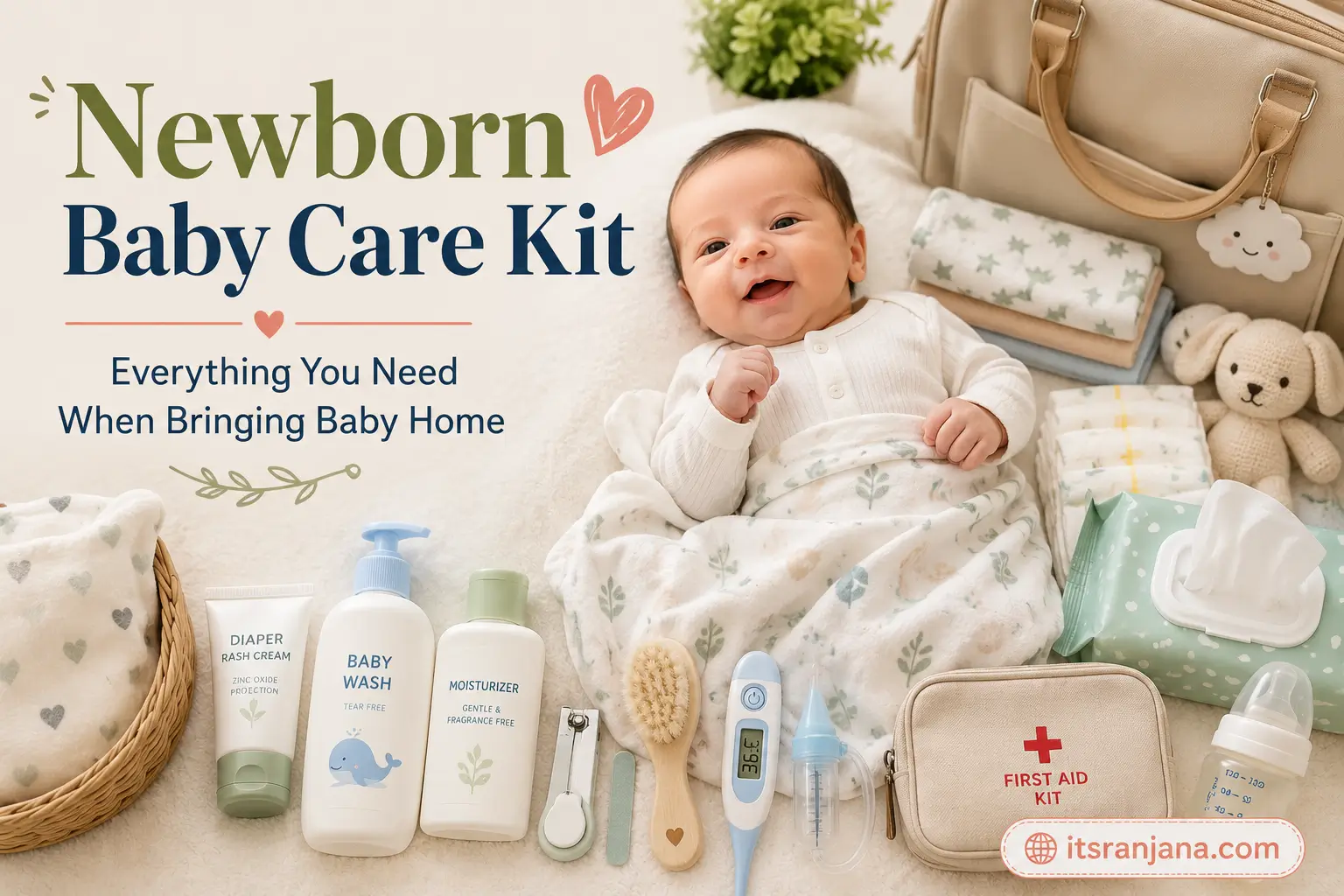
A Brief Table for Your Baby Care Kit Products
| Item | Why You Need It | How Much You Need |
| Diapers and wipes | Used the most out of everything | 1-week stock (Size 0 & Size 1) |
| Diaper rash cream | Stops rashes from happening | 1 trusted tube |
| Gentle baby wash and moisturiser | General skin care | 1of each unscented |
| Nail clippers and brush | Keeping your baby safe from themselves | 1 set |
| Digital thermometer | Knowing when something is off | 1 device |
| Saline drops and aspirator | Clearing stuffy nasal passages | 1 set |
| Swaddles | Comfort and better sleep | 2 to 3 for rotation |
| Feeding essentials | Keeping you and your baby fed | Enough for a full day |
| First aid basics | Taking care of minor injuries | 1 small kit |
| Grab and go bag | Making trips easier | Refilled after each use |
Creating Your Kit One Item At A Time
1. Diapers, Wipes, And More Than You Think You Need
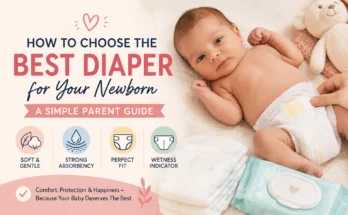
The number of diapers a newborn goes through is surprising when you first see it on the package. 8 to 10 a day is the average for a growing newborn, and having a good stock is important.
Keeping a good stock is a good idea because the size that fits today will be too small tomorrow.
Plain ones are preferable for now since a newborn’s sensitive skin has not used to having anything on it. Lotions may applied during pregnancy.
Keeping a stock of wipes in more than one area also saves you a trip. Just so there is never a time you have to go looking for them.
2. A Good Diaper Rash Cream
Few things are as disappointing as discovering you have a rash that needs treatment. If you are getting ready to go somewhere or do something important, it may irritate you.
Diaper rashes tend to be itchy and sore, which can make even simple movement uncomfortable for your baby.
A simple cream with ingredients like zinc oxide will help in reducing the redness and protecting the skin.
It’s better to stick to one cream you know that works well when you need it. Rather than buying multiple creams you may not need. You can take medical help or visit to a doctor if the rash continues.
3. Gentle Wash And Moisturizer
Baths as a newborn are less about cleaning and more about getting familiar with the sensation and feeling.
A simple tear-free wash works best. According to the Mayo Clinic, most newborns do not require any type of moisturiser unless they have a specific area that appear dry.
For Babies with dry areas, you can apply a moisturiser to those except using that on the entire body.
After the taking care of washing, it is time to move on to the next thing. Most people find themselves worrying about with newborns: the health of their nails.
4. Baby Nail Clippers And A Brush
Newborns grow their nails surprisingly quickly, considering how little it seems like they are doing. Newborn nails are also very sharp, which means there is a good chance of accidentally scratching your baby if you are not careful. Rounded clippers or an emery board are good for shortening them to a safer length.
Doing this while your baby is asleep or being fed makes it much easier. A soft-bristled brush can also come in handy for cleaning cradle cap out of the scalp over time.
5. A Thermometer To Know When Something Is Wrong
A digital thermometer in whatever form works best for you is something that is always going to come in handy as a parent. Ear, forehead, and underarm thermometers are all options that will work, but just make sure to keep it somewhere easy to find, since you’ll likely reach for it often in the first few years.
6. Saline Drops And An Aspirator To Clear Stuffy Nasal Passages
Newborns can not clear their nasal passages, which is a problem because it makes everything from eating to sleeping much more difficult.
You can use a few drops of saline to loose what is stuck in nose when the baby awake, and then a bulb or suction aspirator removes what is left.
Saline nasal drops and an aspirator may not be the most exciting items to add, but watching someone who had a tough time breathing finally able to breathe easy afterwards is worth it
7. Swaddles For Comfort And Sleep That Are Easy To Use
Most, if not all, newborns respond well to swaddling because it recreates the snug, secure feeling they experienced before birth. Most babies will sleep better when swaddled.
Keep at least two lightweight swaddles on hand so you can wash one while using the other.
Make sure to go with breathable materials if you can so your baby is not too hot, especially if you live in a warm climate where temperatures tend to stay up.
8. Keeping Yourself And Your Baby Fed
Eating while parenting is always a difficult task. Choose the feeding method that works best for your family, but always keep enough food and feeding supplies on hand so you do not have to search for things in the middle of a meal or skip it.
If you are bottle feeding, it is always a good idea to have an extra bottle or two on hand just in case. Keep feeding pads or burp cloths nearby so you do not have to run to another room or risk making a bigger mess.
9. A Small First Aid Kit For Minor Injuries At Home
Personal preference is good for the first aid kit. It is always best to keep it small at least until you know what you are going to need. A couple of bandages, antiseptic, and medications recommended by your pediatrician for fevers and minor injuries at home are all good items to have on hand. Keeping this small kit separate from your household first aid kit makes it easier to grab in a hurry. So a small scrape doesn’t mean digging through your whole household kit.
10. A Small Bag With Just Enough Things That You Will Likely Need To Use Somewhere Else
Just having a small bag by the front door makes life easier. Having enough diapers, wipes, and an outfit or two in a small bag you carry everywhere makes it much easier. You only have to worry about what is in your bag for the next outing instead of trying to remember to bring something new the next time you leave.
Once you have everything you think you need, it is time to put it all into a small bag that you will use to go wherever you need to be in the next couple of days.
Having a summary like this is always useful since it helps you remember what you were planning on getting and makes finding what you need a little bit easier if you have to go looking for it. This is just a small example, and you can add or remove things with your personal preference.
The Things You Might Want To Consider But Should Probably Hold Off On
The truth is you do not need all these fancy baby things that promise to make baby care a breeze. Wipe warmers, fancy storage solutions, and things for every possible scenario are all good, but most of them end up going unused after the first few weeks.
It is always best to start small and work your way up rather than going all in from day one because most likely you will not be using everything you get from day one anyway.
Gathering What You Need Earlier Than You Might Think You Have To
If you are reading this and have yet to meet your baby, then it is best to gather what you need at least a week before your due date. Let’s be honest, most babies are not going to be born at the exact moment you expected them to be.
If you are reading this after and your house looks more like a tornado just hit it, there is nothing wrong with what you are thinking right now. It is never too soon to gather what you need all in one place and make it easy to get to.
This Is Only One Perspective On Things
At some point while you are cleaning up a mess you made while taking care of your baby, you will realise that nothing prepares you for everything.
That no matter how well or badly you think you are prepared, you are still going to have nights where you are clueless and have no idea what to do next.
Preparing a baby kit won’t solve every middle-of-the-night challenge, but it will take the panic out of the daily routine.
Parenting is learned one day at a time, and having your basic supplies ready simply gives you more time to cherish those sweet, quiet moments with your little one.
FAQs
What is the most important part of a newborn baby essential kit for first-time parents?
If you could only have one item in your list of things to have around for your baby, it should be something simple like diapers and wipes. You are likely to reach for them more times a day than just about anything else.
The next most important item would be a thermometer of some kind because most things you need are going to be determined based on your baby’s body temperature. All the other items in your kit are things you will use either in combination with these or to support them in some way.
How many diapers should I keep at home?
The rule of thumb for stockpiling diapers is to always have at least a week’s worth on hand since most newborns go through 8 to 10 diapers changes a day. Having two sizes on hand is also a good idea because babies outgrow things much quicker than you may be used to. A small stock of the next size up is always a good idea so you are not caught off guard the next time you need to restock.
Do I really need baby products or will regular ones work?
Most things are going to work for a baby if they are meant to be used for an adult. Newborn skin is much more sensitive and more likely to be affected by outside irritants or other chemicals, meaning it’s best to stick to things that are unscented or specially designed for use on babies just to be safe.
If your baby does have a bad reaction, it is always best to reach out to your pediatrician and ask for advice rather than dealing with it on your own.
When should I start using an aspirator?
You can use an aspirator anytime you notice your baby has stuffy or congested nasal passages. It is especially good to do right before feeding times since a congested nose can interfere with the ability to feed comfortably.
Try to use extra care while doing this since nasal passages at this age are much more delicate and prone to irritation.
What counts as a fever for a newborn?
Anything above 100.4 degrees Fahrenheit or 38 degrees Celsius is a concerning temperature for a newborn, and the Mayo Clinic recommends contacting your baby’s doctor immediately if your baby is under three months of age.
It is always best to trust temperature readings since a baby’s forehead can often be warm for a variety of reasons. Always err on the side of caution and contact your doctor if you have any reason to be concerned.
How often should I be refilling my grab and go bag?
The best practice for a grab and go bag is to refill it the moment you get the chance. It should not be an ordeal of having to wait until the next time you are going somewhere just to find out you forgot to bring one of the things you needed.
Checking it at least once a week is also a good idea just to make sure nothing needs restocking since a baby can go through things faster than you may be used to. Having your bag near the door means you will have everything you could need with you at all times.