
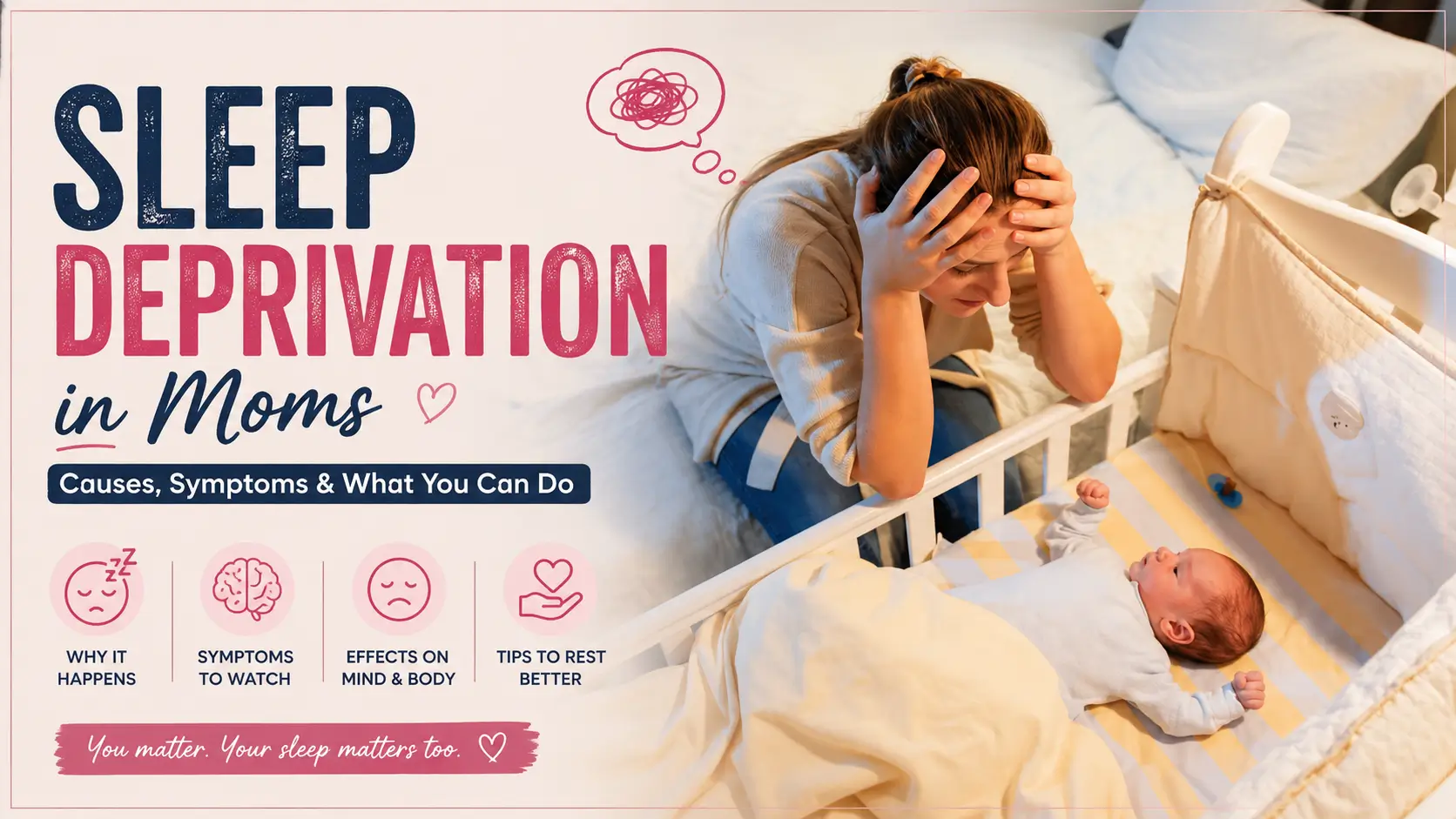
Hi Sleeping Beauty!
Yes, I am really talking to you. You are probably smiling right now, thinking, “Sleeping Beauty”, what a joke. Exactly. That is the point. When did you last actually sleep well?
You track your baby’s sleep as if it were sacred. Every nap, every wake-up, every restless hour. But when was the last time someone asked how many times you woke up last night?
Somewhere between the feeds and responsibilities, your own rest quietly slipped off the list, without you even noticing it leave. So here at ItsRanjana is what this whole article wants you to know. Your child’s sleep matters, truly. But your sleep matters just as much. Not less. Not later. Just as much, starting right now.
What Sleep Deprivation in Moms Really Means?
Let’s slow down and understand what this actually is.
Sleep deprivation simply means your body is not getting enough rest to function well. For most healthy adults, 7 hours of quality sleep is good. You need quality sleep as explained by the Cleveland Clinic. When you think about how unpredictable a newborn’s sleep is, it becomes easy to see why you keep falling short of that number.
This is not a case of being a little tired. It is a state where your body keeps trying to catch up, and it rarely gets the chance.
Think about the last time you felt truly rested, not just awake, but actually rested. If you are struggling to remember, you are far from alone. This is one of the most common yet quietest struggles of new motherhood, and it deserves to be talked about more.
Why Are You So Sleep Deprived?
So what is actually causing all this? Let’s break it down.
1. The Newborn Feeding Cycle
The biggest and most obvious reason is simple. Babies wake up every two to three hours to feed, and you’re the one who has to be there for them. This cycle repeats, night after night, for months.
Imagine setting an alarm every two hours, every single night, for weeks. That is essentially what your body has been doing, except there is no snooze button.
2. Hormonal Changes After Birth
There is a huge shift happening inside your body after giving birth. Progesterone, a hormone that helps you feel calm and sleepy, drops suddenly. At the same time, prolactin rises to support milk production.
As you feed your baby many times in a day, and often at night, your own sleep gets broken into short, scattered stretches instead of one long, restful block. Your body’s internal clock also gets thrown off, making it harder to find deep, restful sleep even when you do get the chance to lie down.
3. Mental Load and Constant Worry
Even when the baby is finally asleep, you lie awake thinking. Is the baby breathing okay? Did I pack everything for tomorrow? What about the appointment, or the laundry, or the groceries? This invisible weight of managing a household and a tiny human keeps your brain busy long after your body should be resting.
This kind of worry rarely shows on the outside. But inside, your mind keeps running through lists, even at two in the morning. Over time, this quiet mental noise makes it harder to fall asleep, even on the rare night your baby actually sleeps through.
4. Lack of Support at Night
You might end up handling most of the night duty alone. Without a partner, family member, or helper sharing the load, your body never gets a real break to recover. Even when you want help, feeding routines or old beliefs about who’s ‘supposed to’ handle nights can make it hard for you to share the load fairly. Over weeks and months, this uneven split slowly wears you down.
5. Nutrient Gaps and Physical Recovery
Your body is still healing from pregnancy and birth. Low levels of iron, magnesium, or vitamin D, along with thyroid imbalances, can drain your energy and further disturb your sleep.
6. Older Kids and Everyday Life
Sleep deprivation is not only about newborns. If you have toddlers or older kids, you face it too. Night fears, school stress, screen time struggles, and simply juggling work with parenting can all steal precious hours of rest.
Whether you are checking on a sick toddler at midnight, helping with a late-night school project, or waiting up until your teenager gets home safely, the tired mornings feel just as real. The reasons change as children grow, but the exhaustion often does not.
You May Also Like: How to Stop Mom Guilt (Even When Your Brain Won’t Let It Go)
Symptoms You Should Never Ignore
So what does all this exhaustion actually do to you? Here is what to watch for.
Physical Symptoms
You might feel constant fatigue that a cup of coffee cannot fix. Headaches, muscle tension, and a weaker immune system are also common. You may notice you catch colds more often, simply because your body is too tired to fight back.
You might also crave more sugar and caffeine, as your body looks for quick bursts of energy. You might notice weight changes or slower healing after birth. These are not signs of weakness. They are simply signs that your body is running on far less fuel than it needs.
Mental and Emotional Symptoms
This is where things often get harder to talk about. You may notice slowed thinking, poor memory, or trouble focusing on simple tasks. It might feel like walking through fog all day.
Mood changes are also very common. Irritability, anxiety, and sudden sadness can show up even if you felt fine before having a baby. Small problems can suddenly feel much bigger than they are. You might find yourself snapping at people you love over things that would not have bothered you before, and then feeling guilty about it later.
In fact, there is a well-documented link between poor sleep and higher rates of postpartum depression and anxiety, as noted by the Mayo Clinic. Lack of sleep can also make it harder to feel joy in small moments, leaving you feeling disconnected from a time that is supposed to be full of happiness. This is nothing to feel ashamed of. It is a real, physical response to a lack of rest.
Long-Term Effects
If sleep deprivation continues for a long time, it does not just disappear on its own. Chronic tiredness can affect your decision-making, your patience with your children, and your overall quality of life. Some mothers find that truly deep, satisfying sleep takes many months, or even a few years, to feel completely normal again.
You May Also Like: A Simple Guide for New Moms to Balance Baby, Home, and You
When Should You Ask for Help?
It is easy to think feeling sleepy is just a normal part of being a mom. You might push through it without a second thought. But there are times when it is more than simple tiredness.
Watch how you feel over the next few days. Do you feel hopeless, like nothing will get better? Do you get angry very fast, even over small things? Do you feel far away from your baby, like you are not really connected? Do you find it hard to get through your day?
If you say yes to any of these, please talk to someone. A doctor or a mental health professional can help. You do not have to wait until things feel overwhelming. You can reach out while things still feel manageable.
You might worry that asking for help means you are weak. That is not true. Asking for help takes courage. It means you care about yourself and your baby. So if you need help, please reach out. It is one of the strongest, most loving things you can do for your family.
Small Steps That Can Help You Rest Better
Alongside asking for help, here are small things you can start doing for yourself today.
Try to sleep when your baby sleeps, even if it is just a short nap. Share night duties with your partner or family whenever possible. Keep your bedroom dark and cool. Limit screen time before bed, since bright light can confuse your body’s clock. Simple habits, like a warm shower or a few slow, deep breaths, can also help your body understand it is time to rest.
You do not have to fix everything at once. Pick one small change this week, and let that be enough for now. Above all, be kind to yourself. You are doing one of the hardest jobs in the world, and rest is not a luxury. It is a need. You can check the full guide on tips to sleep better.
Frequently Asked Questions
1. Why am I so tired even after sleeping a few hours?
Fragmented sleep, where you wake up often during the night, does not let your body enter deep, restorative sleep stages. So even a few hours of broken sleep can leave you feeling more tired than you expect.
2. How many hours of sleep do new moms actually get?
Many new moms get less than the recommended amount of sleep in the early weeks after birth, and much of that sleep is often broken into short stretches rather than one uninterrupted block.
3. Can lack of sleep cause postpartum depression?
Yes, there is a strong link between sleep deprivation and postpartum depression. Poor sleep affects your hormone balance and emotional regulation, which can increase your risk of depression and anxiety after having a baby.
4. When does postpartum sleep deprivation usually get better?
Most of the intense sleep disruption happens in the first few months after birth. However, full sleep satisfaction for you can take a few years to fully return to normal levels.
5. What can I do right now to feel less exhausted as a mom?
Napping when your baby naps, sharing night duties, cutting down screen time before bed, and asking for help from family or friends can all make a real difference over time.
6. Is it normal to feel tired all the time as a mom of older kids too?
Yes, sleep deprivation is not limited to the newborn stage. If you have toddlers or school-going kids, you can lose sleep too, because of stress, late nights, and simply having too much on your plate.
Medical Disclaimer: This article is for informational purposes only and should not replace professional medical advice. If you have concerns about your health, please consult a qualified healthcare provider.