Disclosure: This post contains affiliate links. If you click and buy, I may earn a small commission at no extra cost to you. I only recommend products that I believe can genuinely help moms.
Between folding tiny socks and signing hospital paperwork, you probably found yourself standing in front of diaper packets, wondering if this really needs a strategy. It is. And don’t worry, within a few weeks, you will be shockingly good at it.
Choosing a diaper feels small until you are living with the choice every day, multiple times a day. Let’s make this simple in this guide of ItsRanjana so you can stop reading labels and get back to what matters: falling in love with this tiny baby.
Why The Right Diaper Matters More Than You Think
A diaper is not something you put on and forget about. It sits against the most sensitive skin your baby has for hours at a time. The wrong fit can mean leaks, rashes, and a lot of laundry. The right one can mean fewer wake-ups and a happier baby.
Picture this. It is finally quiet. Your baby has just drifted off after a stretch of crying. Then a small damp patch spreads across the sheet. Suddenly you are both wide awake again. A diaper that fits well and absorbs properly is one of the ways to avoid that exact moment.
You May Also Check: 50 Unique Vintage Boy Names That Feel Like a Warm Hug From the Past
What Makes A Diaper The Right Fit For Your Newborn
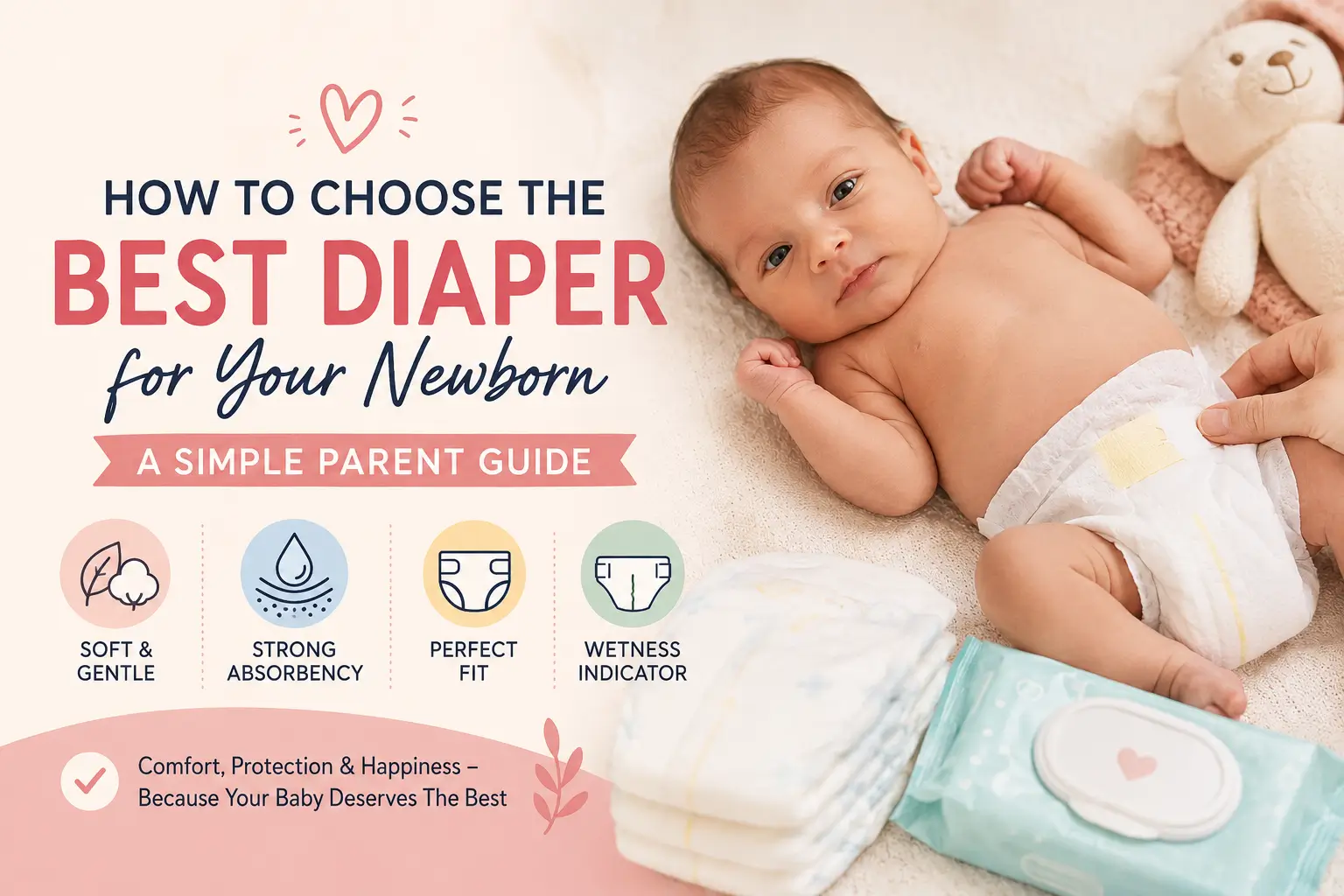
No brand works for every baby, but there are a few qualities that matter in selecting the right diaper.
Softness against skin
Newborn skin is thinner and more sensitive than yours. Look for a diaper that feels soft to the touch with no edges or seams that could rub against your baby’s thighs or belly. Once softness is sorted, the next thing to check is how well the diaper actually does its job.
Strong absorbency without bulk
You want a diaper that can hold a lot without feeling like a pillow strapped to your baby. A good newborn diaper absorbs quickly so wetness does not sit against the skin.
A cutout for the cord
On the very first day, your baby’s umbilical cord stump is still healing. Many newborn diapers have a curved cutout at the front so the waistband does not rub against it. This one small design detail can prevent a lot of irritation.
A Gentle fit
The diaper should sit close enough to prevent leaks. It should never leave deep red marks on the waist or thighs. If you can comfortably slide two fingers under the waistband, the fit is usually right.
A wetness indicator
Many diapers now have a line or pattern on the front that changes colour when it is time for a change. It sounds like a small thing, but at three in the morning it saves you from unwrapping a sleeping baby just to check.
Diaper Size Chart By Age
Every baby grows at their own pace, so age is only a rough starting point. Still, it helps to know what most babies typically wear at each stage.
| Age | Typical Diaper Size |
| 0 to 1 month | Newborn |
| 1 to 3 months | Size 1 |
| 3 to 6 months | Size 2 |
| 6 to 12 months | Size 3 |
| 12 to 24 months | Size 4 |
Keep in mind this is a general guide. Some babies move up a size faster. Others stay in a size longer than expected. That is completely normal.
Diaper Size Chart By Weight
Weight is actually a more reliable guide than age since babies grow at such different speeds. Here is a general breakdown most diaper brands follow.
| Diaper Size | Approximate Weight |
| Newborn | Up to 10 lbs (4.5 kg) |
| Size 1 | 8 to 14 lbs (3.6 to 6.3 kg) |
| Size 2 | 12 to 18 lbs (5.4 to 8.2 kg) |
| Size 3 | 16 to 28 lbs (7.3 to 12.7 kg) |
| Size 4 | 22 to 37 lbs (10 to 16.8 kg) |
If your baby is between two sizes, it is usually better to size up. A loose diaper is easier to manage than one that leaves marks or leaks.
You May Also Like: How to Choose a Baby Stroller That Actually Works for You
Types Of Diapers You Can Choose From
Once you understand fit and size, the next decision is which type of diaper suits your lifestyle and your baby’s skin.
Disposable diapers
Chances are this is what you already have in your hospital bag. Disposables are everywhere from the corner pharmacy to the supermarket, and honestly, at 2 am you will be glad you don’t have to think twice about grabbing one.
Cloth diapers
A lot of parents are wary of cloth diapers at first because of the extra laundry. Once you get into a rhythm, most say it stops feeling like a chore. Your wallet notices the difference a few months in.
Biodegradable or eco-friendly diapers
If sustainability is on your mind, these try to give you the best of both worlds: quick and kinder to the planet. The catch is they usually cost a bit more. It comes down to what matters most to your budget right now.
Hybrid diapers
Cannot decide between cloth and disposable? Hybrids let you have both. You keep the cover and just swap the insert so there is less guilt and less laundry than full cloth. To get more details, you can check our full guide on baby care kit.
Signs The Diaper You Picked Isn’t Working
Sometimes you only find out a diaper is not working after trying it for a few days. Here is what to watch for.
Frequent leaks
If you’re doing sheet changes more often than diaper changes, that’s your sign. Something about the fit or absorbency isn’t clicking with your baby yet.
Red marks on the skin
Marks that are still sitting on your baby’s skin well after you’ve taken the diaper off mean it’s too tight.
The diaper feels loose around the legs
When legs feel loose, and liquid keeps sneaking out the sides, it’s time to try a size up or maybe a different brand, since shapes vary more than you’d expect.
Constant blowouts from the back
If blowouts keep happening from the back even though the chart says the size is right, trust what you’re seeing over the chart.
Simple Tips For Choosing And Using Newborn Diapers
A small habit can save you a lot of frustration in these early months.
Buy a pack before committing
Newborns grow fast, and skin sensitivity varies. Try a pack of a new brand before buying in bulk.
Check the fit, not just the number on the chart.
Weight charts are a starting point, but your baby’s actual shape matters more. Some babies are longer, some rounder, and the right size reflects that.
Change diapers often in the first weeks.
Newborns need frequent changes, often every two to three hours, since their skin is more prone to irritation.
Keep the area dry
Fold the front of the diaper down or use one with a cutout until the umbilical cord stump falls off on its own.
Trust what your baby’s skin is telling you.
If a certain brand keeps causing redness, it is okay to switch even if it is a hassle. Every baby’s skin reacts differently.
When Diaper Rash Needs a Doctor’s Attention
Redness now and then is common and usually clears up with more frequent changes and some diaper cream. However, according to the Mayo Clinic, you should reach out to a doctor if the rash does not improve within a few days, if it spreads beyond the diaper area, or if you notice blisters, pus, or a fever alongside it. Trust your instincts here. You know your baby’s skin better than anyone else does.
Top Diaper Brands Parents Around the World Trust
Finding the right diaper is usually a matter of trying a few and seeing what works. Some brands are really good at getting the important things right, like being soft, preventing leaks, and being gentle on newborn skin.
Pampers :
It is an all-round choice. You can buy Pampers anywhere. Their Swaddlers and Premium Care diapers are really soft. They have a handy wetness indicator. They also have a cutout for the umbilical cord, which is great for new babies.
Huggies:
They are good for babies with sensitive skin. They fit snugly. Have a special waistband that helps stop leaks. Parents love them because they prevent messes.
Bambo Nature:
These diapers are a choice if you want something eco-friendly. They are popular in Europe, North America, and Asia. They are certified as eco-friendly and do not have chemicals.
Coterie & The Honest Company:
Coterie and The Honest Company make good premium diapers. They are popular in North America and Europe. Their diapers are super absorbent and feel like clothes.
SuperBottoms:
They make reusable cloth diapers. They are a choice for people who want to use cloth diapers. Their diapers are adjustable and soft on the skin.
Tip for parents:
A good thing to remember is not to buy many diapers at once. Every baby is different. It is a good idea to try a small pack of diapers first to see if your baby likes them before buying a lot.
FAQs
How many diapers does a baby use in a day?
Between 8 and 12 a day is normal in those early weeks, and yes, it does feel like a full-time job at first. The good news is this number quietly drops as your baby grows, so hang there.
What size diaper should I buy first for a newborn?
Go with the newborn size to start; that is what fits most babies fresh out of the hospital. Keep a small pack of size 1 sitting in the cupboard too because some babies outgrow the newborn size faster than you’d expect. Check the weight range before you buy anything in bulk.
How do I know if a diaper is too tight or too small?
Persistent red marks even after the diaper comes off, or blowouts from the back, are the clearest signs. If either shows up, it is time to size up.
Are expensive diapers always better?
Not really. A higher price tag does not guarantee it will suit your baby. You will find brands that work wonderfully for one baby and irritate another. It usually comes down to what your baby’s skin likes, not what the packet costs.
When should I switch from newborn size to size 1?
Around 10 pounds or 4.5 kilograms is the usual marker, though tightness or leaking can mean it’s time sooner. Go by how the diaper fits, not just the number on the box.
One Last Thought
You are going to try a brand before you find the one that just works. That is not a failure of planning; it is simply part of learning your baby. Somewhere, in the middle of all these decisions- softness, size, fit- you are already doing what a good parent does. You are paying attention.