
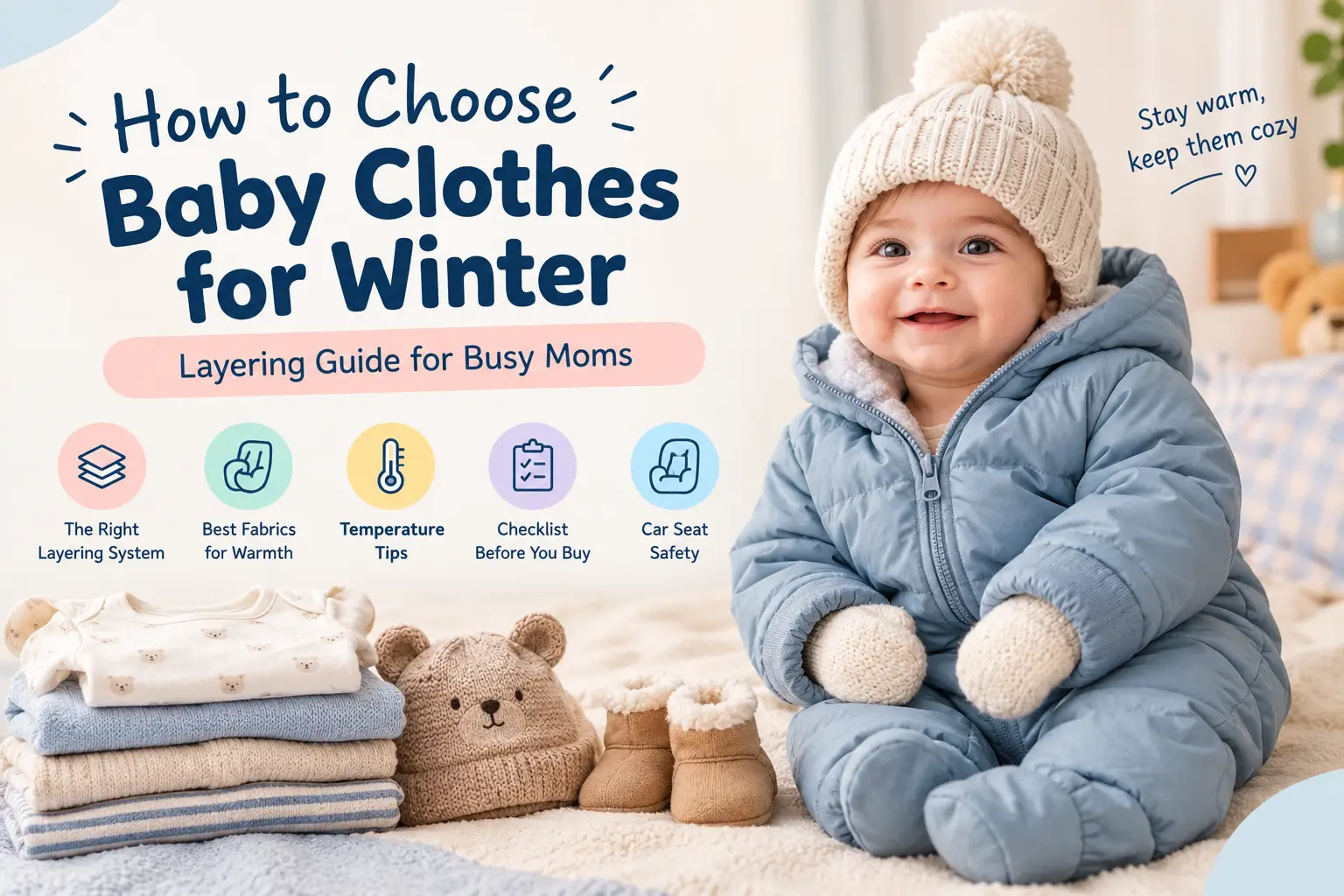
Dressing a baby for the winter sounds easy until you’re standing in the wardrobe with three tiny sweaters and a bear-shaped hat in your hands. It’s confusing, but it doesn’t have to be. A simple three-layer system takes the guesswork out of it.
You won’t need a wardrobe full of outfits. This guide covers what to dress your baby in during winter, the best fabrics, how many layers to use, and a buying checklist so you don’t overbuy.
You can use the guide for dressing a newborn or a winter-exploring toddler. The clothes might differ, but the rules will be the same. Follow this step-by-step guide, and you’ll master the art of baby winter dressing without any hassle. Let’s start!
The Layering Rule: Base, Middle, Outer
Imagine an onion, only this one is adorable and wears a cute hat. Yes, that’s how you need to think about dressing your baby for the winter. You guessed it: light layers that allow you to regulate your baby’s body temperature.
Wearing multiple thin layers of clothing warms the skin by trapping the warm air close to it. It also allows you to quickly add or remove a layer according to the weather. This way, you’ll be prepared for going from the cold street into the heated mall.
A useful rule of thumb is to dress your baby in one more layer than an adult would wear in the same conditions. However, the right number of layers depends on the weather, your baby’s age, and the setting. Here’s how your baby’s outfit can look:
1. The Base Layer
The base layer is what a baby wears closest to the skin, and it’s all about comfort. A stretchy cotton bodysuit or a thin long-sleeve top is a great option. The goal is to keep the skin dry and comfortable, and a well-chosen base layer will help. For example, you’ll easily reach for this layer if the baby’s diaper leaks.
Choose the kind with flat seams and no irritating tags, as these will be touching the delicate skin of your baby. It should fit snugly but not tightly against the skin, leaving room for air circulation. A long sleeve and an envelope neck are good to have in a base layer, as they allow you to put the baby in it without disturbing the skin.
The base layer is what will likely stay on the baby all day and night, so comfort is vital. It should be easy to remove and machine-washable.
2. The Middle Layer
Now, it’s time to move to the next step in the layering system and add a middle or warm layer on top of the base. This one will keep the baby’s body heat in and is usually the one you can easily take off if it’s too warm. So the fabric can be anything from a knitted sweater to a thick fleece set.
This layer primarily depends on the room’s temperature, and it’s crucial to assess that before you head out. A warm knit might be a good option for an average room, whereas a heavier fleece is necessary for a cold room. You can also opt for a zip front, as it will be easier to take off when your baby gets too warm.
Avoid very large hoods, as they might bunch up at the back of the baby’s head and irritate it when they lie down.
3. The Outer Layer
The last step in making the perfect winter outfit for your baby is choosing the outerwear. It should protect them from the wind and cold while allowing them to move comfortably.
On mild days, a thin fleece suit can work as an outer layer. In colder or windier weather, keep fleece as your middle layer and add a windproof shell on top. However, keep in mind that bulky outer layers are unsafe in a car seat. We’ll explain this in more detail below.
Choose outerwear made from a windproof fabric and a soft inner lining. The sleeves and leg openings should have a fold-over cuff to keep the hands and legs warm. They might seem unnecessary, but they will protect the baby’s extremities from cold temperatures without the need for extra mittens or booties.
Here’s what you can do: put your baby in a cotton bodysuit, a knitted sweater, a thin fleece suit, and a beanie for a winter walk. When you enter the heated mall, you can unzip the fleece and take off the beanie. This will keep your baby warm in the mall without making them sweat.
Now that you know how to choose clothing for a baby in winter, let’s talk about materials.
Best Fabrics for Baby Winter Clothes
Say you’re at the park with two babies in winter clothes. You’re both cold, but only one is comfortable while the other seems miserable. What gives? Well, one has wisely chosen to wear merino wool while the other wears a stiff, plastic-feeling outfit. You guessed it: it’s all about materials!
Here are the best materials for baby winter clothes:
1. Cotton
Cotton is a great choice for a baby’s base layer. It’s soft against the skin and easy to clean, making it perfect for everyday wear. Avoid dressing your baby in cotton alone during the winter, but it’s a great addition to other layers. A plain cotton knit is stretchy and comfortable, and you should wash it before the first wear to remove stiffness.
Cotton works well as a comfortable base layer, but in colder weather, combine it with warmer layers suited to the conditions. The right combination depends on the room temperature and the weather outside.
2. Merino Wool
Fine, soft merino wool is another great option for a baby’s base layer. Unlike coarse wool, it doesn’t irritate the skin. It’s perfect for keeping warm on the coldest of winter nights. Many parents reserve merino wool for the coldest months and opt for a cotton base layer during other seasons. Make sure to choose a child-friendly merino knit.
Merino wool is highly breathable, so it’s perfect for keeping warm without sweating. It regulates temperature beautifully and doesn’t need much maintenance. The fabric is expensive, so you’ll want to invest in a couple of merino wool outfits and keep them in your rotation. Always follow the washing instructions, as this wool tends to shrink.
3. Fleece
Fleece is extremely warm and can keep a baby warm even on the coldest of days. It’s a fantastic middle layer because it’s light, stretchy, and doesn’t restrict a baby’s movement. Fleece fabric is also very economical and easy to find. A great tip for choosing a fleece outfit is to look for a zipper in the front. It will prove to be invaluable when the weather gets too warm.
One downside of this fabric is that it can easily pill, especially with frequent wear. However, this doesn’t affect the quality and warmth of the garment. Always remember that a baby can feel too hot in a fleece suit in a heated room, so it’s best to go with a fabric that has an easy-to-open front.
4. Fabrics to Avoid
If you’re trying to choose the best outfit for your baby in cold weather, avoid dressing your baby in stiff or scratchy wool, since it can irritate delicate skin. Fine, soft merino is the exception. Steer clear of thick fabrics that can cause a baby to sweat heavily. Likewise, avoid clothing that has large beads, buttons, or strings that can snag onto the baby’s skin.
Avoid dressing your baby in plastic-feeling fabrics for long stretches. It can trap sweat and leave them feeling sweaty and uncomfortable. Lastly, always make sure that there are no loose strings in your baby’s mittens or booties before putting them on the baby.
Moving on, let’s talk about the best way to dress your baby for the winter according to the temperature.
What to Dress a Baby in Winter: By Temperature
The air smells of frost, and your baby takes one look at the sky and decides that today is a snowsuit day. How do you know what to dress a baby in winter? Don’t fret. Here’s a handy chart that will show you what to dress a baby in winter according to the temperature.
Temperatures are in °C, with °F in brackets.
| Outside temperature | What your baby wears |
| 15 to 20°C (59 to 68°F) | Cotton bodysuit, long-sleeve top, pants, light cardigan |
| 10 to 15°C (50 to 59°F) | Bodysuit, footed pants, warm sweater, thin hat |
| 5 to 10°C (41 to 50°F) | Base layer, fleece middle, jacket, hat, socks |
| 0 to 5°C (32 to 41°F) | Thermal base, warm middle, padded suit, hat, mittens, booties |
| Below 0°C (below 32°F) | All the above plus an extra middle layer, short outings only |
This is a general guide, not a fixed rule. Every baby is different, and the appropriate clothing depends on factors such as wind, dampness, sunshine, activity, and the baby’s age. Adjust the layers according to the conditions rather than relying on the temperature alone.
Likewise, if you’re taking a stroll in the sun, you can go one size lower in clothing. The opposite goes for when it’s cloudy or damp outside. Also, remember that a car ride with the heater on feels like a warm room, so you should take a layer off when you get inside the vehicle.
As you can see, there’s a lot to take into account when you’re deciding how to dress your baby for the winter. But what if you’re a first-time parent who’s unsure what to buy to dress your baby in winter? Here’s a buying checklist that will help you decide how many of each item to buy.
Winter Essentials Checklist: How Many of Each
One thing the baby community learns quickly is that babies grow fast and spill faster. That adorable outfit you bought is worn by your baby two days in a row. You want to have a size bigger so they can wear it for longer, but you don’t want to overbuy. So here’s what you need to know about how many baby winter outfits to buy.
- 6 to 8 long-sleeve bodysuits for base
- 5 to 7 footed sleepsuits
- 4 to 5 pairs of soft pants or leggings
- 2 to 3 sweaters or fleece tops for middle
- 1 to 2 warm outer layers, i.e., a fleece suit or jacket
- 2 to 3 soft hats that cover the ears (for outdoors only; take them off once you’re inside)
- 5 to 6 pairs of socks or booties
- 2 pairs of mittens
- 2 to 3 light blankets for the stroller
Babies grow quickly, so it’s helpful to plan your purchases around your baby’s everyday needs. If you’re preparing for your newborn’s arrival, check out our newborn baby essentials checklist to make sure you have the basics covered.
As you can see, the outer layer is represented by a few items in the list. This is because your baby will be spending most of their time at home, where they can comfortably wear thinner outfits.
The other layers take over the task of keeping the baby warm outdoors. You can customize the list according to your preferences and lifestyle.
For example, if you like to do laundry daily, you can reduce the number of bodysuits and sleepsuits on the list.
On the other hand, if you do laundry only once a week, you can add more bodysuits and sleepsuits to the list.
You can also choose to spend your money on the outer layer or the merino wool base layer and save on hats, socks, or the like. They simply won’t last as long, seeing as the baby will grow out of them quickly.
Hand-me-downs are also a great option that you can consider. Make sure to wash them properly and look out for any tags or seams that might irritate your baby’s skin. They should ideally be in excellent condition, without any holes or abrasions.
Now that you have an idea of how many outfits you need to buy for your baby this winter, let’s move on to the ultimate safety concern when it comes to winter clothing.
Car Seat and Stroller Safety: No Bulky Coats Under the Harness
Your baby is a walking marshmallow, and you’re sure that the thick coat and snowsuit they’re wearing will keep them warm no matter what. However, did you know that the American Academy of Pediatrics discourages putting thick winter coats and snowsuits under a car seat’s harness?
Here’s why: thick winter coats compress to a smaller size when fastened, leaving extra slack between the harness and your baby.
This, in turn, decreases the effectiveness of the seat belt. So how do you keep a baby warm under such conditions? Here’s what you should do instead.
1. Dress in Thin Layers
Start by dressing your baby in thinner layers. Avoid dressing your baby in a thick snowsuit and opt for a lighter fleece suit. Add socks, a beanie, and mittens to keep your baby’s extremities warm. These items will prove to be invaluable when it comes to staying warm under a car seat harness.
2. Buckle First, Bundle After
Once you’ve dressed your baby in thinner layers, take out any thick pieces of clothing. Tighten the harness so there is no extra slack.
Then do the pinch test: try to pinch the strap at your baby’s shoulder. If you can pinch any webbing, tighten it more.
After you’ve buckled your baby into the seat, add a coat or a blanket over the car seat harness.
3. Skip Add-Ons Under Your Baby
Avoid using car seat inserts, sleeping bag liners, or other accessories that haven’t been approved by the car seat manufacturer for that specific seat. Bulky products placed underneath the baby or between the baby and the harness can interfere with proper restraint. Always follow the manufacturer’s instructions when choosing car seat accessories.
The stroller is a different case altogether. Cozy bunting bags and thick blankets are fantastic for keeping the baby warm while they’re exploring the world in the stroller. Just make sure that they’re comfortable and that their breathing isn’t restricted. Likewise, you should periodically check the baby’s neck and chest for signs of sweating and remove a layer if necessary.
Keeping the baby warm isn’t something you have to do all day. You can simply carry a spare light layer in your bag and add it to the stroller if the temperature outside is especially low. Remove it at a warm stop or when you’re about to get back into the car. Here’s how you can do that.
Once you’re in the car, remove your baby’s thick bunting or bundle first before fastening them in their car seat. This way, your baby will be as warm as possible without posing any safety risks.
When you know how to dress a baby for the winter, the next step is to make sure the clothes you have fit snugly over your baby’s body. Here’s a guide to sizing baby winter clothes.
If you’re planning regular outdoor walks with your baby, choosing a suitable stroller can make outings easier. Here’s our guide on how to choose the right baby stroller.
Sizing Tips: How to Pick the Right Size
When you look at the perfect outfit you found online, it fits your baby to a T. But a week later, it’s obvious that the baby has grown out of it. Here’s what you need to know about sizing in baby winter clothes.
1. Size by Current Measurements
Choose clothes based on your baby’s current measurements and the manufacturer’s size chart. If your baby is between sizes, one size up is fine, but no more than that. This helps ensure that the outfit allows comfortable movement without excess fabric. Make sure the clothes fit comfortably over the intended layers without being too tight.
Since different manufacturers have various body measurements in mind when they make clothes, it’s also a good idea to buy clothes according to the baby’s height and weight instead of their age. So a six-month-old baby could be wearing a three-month-old size in one brand and a six-month-old size in another.
2. Don’t Buy Too Big
Make sure to avoid buying clothes that are too big, as it can pose safety concerns. Such clothes can also expose the baby to cold air, so look for the ideal size that is snug but not too tight.
3. Try It On at Home
Lastly, always try on a piece of clothing before you buy it. You should be able to slide your fingers in the waistband and the top of the garment. Make sure to wash the clothes before you try them on, as cotton clothes can shrink slightly when washed.
Babies grow quickly, so check their measurements regularly and buy new clothes when needed. If you’re unsure about the size, keep the receipt so you can exchange the garment if necessary.
A well-fitting outfit is essential, but it’s also understandable that a parent doesn’t have much time in the morning to change a baby’s outfit. So here are some helpful hints regarding clothes that are easy to put on.
Easy Dressing Features for Busy Mornings
Imagine a wriggling baby that reminds you of an energetic goldfish. You hold one sock in one hand, and one sleeve in the other. As a busy parent, you might feel like asking yourself, “Which features in baby clothes are the easiest to dress a baby in during the morning rush?”
Here are some essential features in baby clothes that make it easy to dress a baby.
1. Footed Onesies and Sleepsuits
Start by buying footed onesies and sleepsuits. With such clothes, you don’t have to worry about losing or finding your baby’s socks. Also, their feet won’t be exposed to the cold, making mornings much easier. You can choose from a wide variety of onesies and sleepsuits, including ones with a front zipper.
2. Zippers Over Snaps
Zippers are a good option. A long zipper from the neck to the feet is particularly helpful, as it allows you to dress the baby without disturbing them, even when they’re asleep. Look for a small flap over the chin. A two-way zipper that opens from the bottom is even better, since it lets you change a diaper without undressing your baby, which helps a lot during night feedings.
3. Wide Necklines and Envelope Shoulders
Choose clothes with wide necklines that are easy to dress the baby in. You can also look for clothes with envelope shoulders, as they are stretchy and can pass over a large head.
4. Fold Over Cuffs
Lastly, look for clothes with fold-over cuffs. They can help keep your baby’s hands and feet covered without needing separate mittens or socks in milder conditions. Check that the cuffs fit comfortably and don’t restrict circulation.
One last thought on how to dress a baby for the winter is to lay out your baby’s clothes for the next day in order the night before. You’ll be able to reach for them faster and, in turn, get dressed faster.
With clothes that are easy to put on, you can avoid the early-morning chaos. There’s nothing more frustrating for a busy parent than waking up to the sound of an upset baby that needs to be dressed first thing in the morning.
FAQs
By now, you should know what to do to choose baby clothes for the winter in every sense of the word. Yet, a few questions will always come up about the best way to dress a baby for the winter. Here are some of the most common questions first-time parents tend to search for.
How Many Layers Should a Baby Wear in Winter?
The easiest way to tell how many layers a baby needs in winter is to dress your baby as warmly as you feel and add one more layer. Think about the temperature outside as well. A good rule of thumb is to wear a base, middle, and outer layer outdoors and skip the outer layer indoors. Always make sure to check if the baby’s neck or chest feels warm.
What Should a Newborn Wear in Winter at Home?
A cotton bodysuit and a footed sleepsuit may be suitable for a newborn in winter at home, depending on the room temperature. Add or remove layers as needed. For sleep, use appropriate sleepwear and a correctly sized baby sleeping bag or suitable lightweight bedding. Avoid overheating, hats indoors, and loose bedding around the baby’s face. Every baby is different, so check with your pediatrician if you’re unsure about layers for sleep.
Is Merino Wool Safe for Babies?
Fine, soft merino is safe for babies. Unlike scratchy wool, it doesn’t irritate the skin. Always choose merino wool that’s recommended for children. Wash it according to the care instructions, and make sure to test a small piece of it if your baby has very sensitive skin. If you’re unsure, your pediatrician can help you choose the right merino wool garment for your baby.
Can My Baby Wear a Winter Coat in a Car Seat?
Your baby should not wear a winter coat in a car seat. Thick winter coats tend to compress under the car seat harness, leaving unsafe spaces between the harness and the baby’s body. Remove the winter coat before you secure the baby in the car seat. You can put the coat on over the car seat harness, or lay a blanket over the harness.
How Do I Know if My Baby is Too Hot or Too Cold?
Check the baby’s neck or chest to see if it’s sweaty or if it feels cold, respectively. A warm and dry neck or chest is a sign that you’ve dressed appropriately for the weather. If the baby’s chest is sweaty or their face is red, it means that it’s too hot, and you should take off one layer. Likewise, if the baby’s chest feels cold, you should add a layer. This goes for the neck area as well.
What Size Winter Clothes Should I Buy for My Baby?
Choose by current measurements. If your baby is between sizes, one size up is fine, but no more than that. A size too big can let the cold in and pose safety risks. Make sure to try everything on for the best fit before the cold weather sets in.
A Warm Thought Before You Go
One day this winter, you’ll zip your baby in a soft suit. Tiny cheeks will peek out from a larger hat. You’ll smile at the sight of it all, for you’ve mastered the art of baby winter dressing.
You don’t need fancy clothes or a wardrobe full of outfits. You just need thin layers, soft fabrics, and a safe car seat harness. Everything else is extras.
And on those mornings, when the socks have vanished, and the sleeve has decided to fight you, you can be gentle with yourself. You’re keeping a tiny person warm.




2 Comments on “How to Choose Baby Clothes for Winter: Layering Guide for Busy Moms”