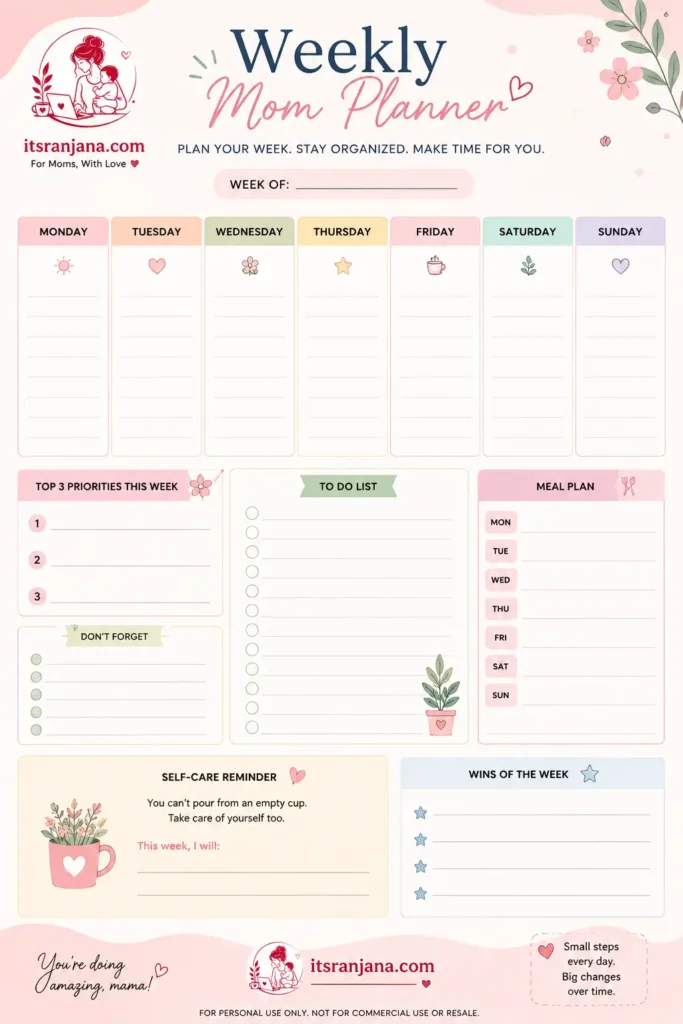

One of the busiest jobs in the world is to be a stay-at-home mom. There is always something to do from the moment the day begins.
Breakfast needs to be prepared, kids must be taken care of, laundry accumulates, and toys are everywhere – the kitchen becomes messy again within minutes.
At the end of the day, many moms feel exhausted and still feel like they haven’t done enough.
This is the story of Neha, a stay-at-home mom with the same feelings. She constantly feels extremely busy, stressed, and fatigued. Slowly, she discovered how her life could be easier through small adjustments in her routine.
Through her journey, you will also discover how to better structure your daily life as a stay-at-home mom and bring more balance into your home.
Neha’s Busy and Stressful Days
Neha woke up tired each day. Her kids called her before she could take her tea in peace.
“Mumma, where are my socks?”
“I’m hungry.”
“he took my toy!”
Neha was already frustrated by 10 AM. She cleaned the house while preparing lunch and helped her daughter with homework and folded clothes. She was interrupted and moved from one task to another, but still felt that nothing was accomplished.
When she would finally sit down at night, she would wonder how other moms were managing so well.
One day, her friend came to visit her and said simply:
“You do not have to do all things perfectly; just a routine that works for you.”
It stuck in Neha’s mind for days.
Why Are Simple Routines Removing Stress for Moms?
Neha knew that she was lacking a proper routine. Each day was not easy. She solved problems only when they came up. So, she made a plan to have a simple day. Not a set timetable. Simple things that might make life easier.
From then on, this was her turning point.
Good routine ideas for a housewife are a topic of search for many moms, because routines help to minimize stress and mental energy. They create a sense of calm and control when you know what is happening next during the day.
How to Create a Daily Schedule as a Stay-at-Home Mom?
Neha began planning her day in simple blocks instead of trying to manage every minute. Her new daily routine as a stay-at-home mom looked like this:
Early Morning
- If possible, get up before the children
- Drink water and freshen up
- Prepare breakfast basics
- Take a moment or two to be active and relax
This start completely changed her mood.
Morning Routine
After the children had woken up, Neha was only interested in morning chores:
- Breakfast
- School preparation
- Quick kitchen cleanup
- One load of laundry
She didn’t clean the entire house; she focused only on the necessary tasks first.
This made her feel less overwhelmed.
Mid-Morning Routine
- She finished some housework after breakfast.
- On some days, she did the work of cleaning the bathroom.
- Sometimes she organised the cupboards.
- Other days, she just ironed clothes.
- She didn’t push herself to do all of the things every day.
These are some of the best routine ideas for SAHMs because they make housework easier.
Afternoon Routine
- After lunch, the afternoons were quiet.
- Neha took time to rest or enjoy herself when the kids were resting or playing.
- Sometimes she had already rested.
- Occasionally, she used to watch a show.
- At times, she focused on her hobbies or personal interests.
- She used to believe that it was a waste of time to relax. Now she learned a secret, though:
Evening Routine
- Evenings are family time.
- Neha spoke to her children about their day while preparing dinner.
- Everyone helped with small cleaning duties after dinner.
- Her daughter put the cushions in place.
- Her son picked up toys.
- Her husband sometimes helped with the dishes.
- This made household chores feel shared instead of stressful.
Read Also: How to Teach Kids Time Management? (Age-by-Age Guide)
How to Be Productive as a Stay-at-Home Mom
Previously, Neha believed that productivity was being busy throughout the day.
Gradually, she discovered, however, that if she was going to be productive, she had to be able to do things that were important without getting tired all the time.
Here are some easy things that helped Neha be productive as a stay-at-home mom.
1. Do Important Tasks First
Neha gave up on doing 20 things at once. Every morning, she jotted down just three key tasks.
For example:
- Finish laundry
- Clean kitchen shelves
- Help the children with their homework
With all of this done, she was satisfied, not stressed.
2. Stop Doing Many Things Constantly
Previously, Neha used to cook, answer calls, do the counters, and assist the kids with their work.
This complicated everything and made it more stressful. She now works on one thing at a time. Her mind felt more relaxed, and her work became easier.
3. Use Small Cleaning Sessions
Neha began to use the “15-minute rule.”
She cleaned small areas all day instead of spending several hours cleaning.
- 15 minutes for dishes
- 15 minutes to organise toys.
- 15 mins to fold clothes.
Regular clean-ups prevented major messes from building up.
4. Make Things the Night Before!
One of the few habits that saved Neha from a lot of stress: Preparing at night.
She prepared breakfast, tidied clothes, and packed bags for school before going to bed. This helped her to make the morning easier and less hectic.
How to manage the household and kids at the same time?
Neha’s long-standing challenge is to run the household and children at the same time without getting exhausted.
Then she came up with an idea to make things easier. It is not always necessary for children to be removed from chores.
While she was working, she did not send the children away, but let them do small assignments. Her daughter folded towels. Her son placed toys into baskets.
She kept her children busy while cooking. This helped the children to feel included and made housework easier.
Accepting that homes with kids will get messy
Neha always felt stressed about making her home clean.
But children are prone to making messes.
- Toys scatter everywhere.
- Cushions move.
- Laundry piles up.
- And that is normal.
After accepting this, Neha began to see that she was not angry about all the little messes.
A happy mother is more important than perfect cleanliness.
How to Plan a Meal that saves the time of a stay-at-home mom?
Meal planning can be made easier with simple preparation. Every night, Neha found herself in a dilemma about what to prepare for dinner.
This became a daily struggle that consumed time and energy. After that, she began to plan for simple meals.
Nothing fancy.
Some simple concepts for the week.
For example:
- Monday: Dal rice
- Tuesday: Pasta
- Wednesday: Rajma chawal
- Thursday: Roti sabzi
Simply doing this helped a lot with stress, and it also made grocery shopping easier.
Simple self- care habits every stay-at-home mom needs?
Self-care is extremely crucial, especially for homemakers, who spend the majority of their time looking after others.
While taking care of their children, cooking, cleaning, and home duties, many mothers do not pay attention to themselves. This can cause stress, frustration, and fatigue over time.
Self-care doesn’t have to be costly vacations and treatments. There are also small daily routines that can help you feel better, happier, and maintain your mental health.
1. Begin your day with a relaxed and calm mood
How you start the day can sometimes impact the whole day. Rise a bit early to get some quiet time before it gets busy at home.
You can sip tea quietly, pray, stretch your body, or just sit quietly for a few minutes. This is a small habit that will help to minimize stress and mental readiness for the day.
2. Make small breaks in the day
Many stay-at-home moms work around the clock, from morning to night. This constant work can mentally exhaust you.
Short breaks are important. 10-15 minutes of break will help refresh the body.
For instance, you can:
- Listen to music
- Sit out for fresh air
- Watch a short video
These small breaks brighten your day and get you moving.
3. Proper Meals and hydration
Many mothers become so busy taking care of others that they forget to eat. Not eating or drinking enough may cause you to feel irritated and weak.
Aim to have nutritious meals at regular times and drink plenty of water all day long. Good physical health also supports better mental health.
For instance, having a water bottle within reach while working can help to remind you to drink water.
4. Continue Your Hobbies
Being a mom doesn’t mean you have to lose yourself. Engaging in activities you like can make you feel happier and more relaxed.
For example:
- Reading books
- Gardening
- Dancing
- Watching favorite shows
- Writing or painting
Just 20 minutes of hobbies can help improve mental well-being.
5. Seek assistance if necessary
Some moms think that they have to do it all themselves. It’s okay to ask for help.
For example:
- Have your husband do some dishes.
- Allow children to arrange their toys.
- Distribute household chores among family members.
Having support from family members can reduce stress and make life easier.
6. Stop Expecting Perfection
Many mothers feel stressed due to the desire to make everything perfect.
Of course, any household with kids will be messy at times. Toys may be strewn, dishes may be left in the sink, and laundry may be left in the laundry basket.
That does not mean you’re failing as a mother.
Peace and happiness in the home are more important than a squeaky-clean house.
Common mistakes that stay-at-home moms make
There are certain habits and expectations that many of those who stay at home with the kids may not know that they are adding to their stress.
The knowledge of these errors can help make everyday life simpler and more balanced.
1. Trying to do Everything perfectly
One of the biggest mistakes that moms make is expecting perfection in all tasks.
They want:
- A spotless home
- Perfect meals
- Finishing every task perfectly every day
This puts more stress and fatigue on people.
For instance, if toys are left on the floor one day, then it’s not a failure. There’s no such thing as perfection in family life.
2. Making comparisons with other mamas
Perfect routines, organised homes, and happy families are usually a feature of social media. Numerous moms make comparisons to these unrealistic images.
This comparison can reduce self-confidence and cause stress.
For instance, one lady might seem very organized on social media, but you don’t see her rough days or struggles behind the scenes.
All families are unique.
3. Neglecting rest and self-care
Many stay-at-home moms feel guilty when they rest. They think that it is lazy to take breaks. However, without rest, there can be a risk of overexertion, irritation, and mental fatigue.
A mother who has never slept may get angry over minor issues easily, as her mind and body are exhausted.
Rest is not selfishness; it is necessary.
4. Multitasking Too Much
There are some moms who attempt to do several things at the same time.
For example:
- Cooking while helping children with homework
- Washing hands during telephone conversations
- Cooking while replying to messages on the phone
Excessive work can lead to stress and greater difficulty in completing tasks.
Doing one thing at a time sometimes saves a lot of energy.
5. Not Asking for Help
There are some mothers who feel that they have to do everything by themselves. This places undue stress on the body.
For instance, children may be able to set the toys, and family members can do small chores.
It’s less stressful and easier to live with shared responsibility.
6. Following Unrealistic Schedules
Strict timetables can be frustrating when things go wrong. Kids can get sick, guests can arrive out of the blue, or things can change at home. Flexible routines help as families aren’t always predictable.
For instance, instead of having a carefully orchestrated minute-to-minute plan, make simple plans that can be altered easily if necessary.
7. Forgetting Their Own Identity
Many mothers realize that they are too busy caring for others and slowly stop focusing on themselves.
They lose their passions, dreams, and interests. It is crucial to keep your identity in the long run for happiness and confidence.
Sitting down to read a book, taking a walk, or enjoying some quiet rest can provide moms with emotional comfort and a positive outlook in their everyday lives.
You May Also Read: Best Time Management Apps that Really work for Moms
Simple Japanese Techniques to Save Time and Avoid Procrastination
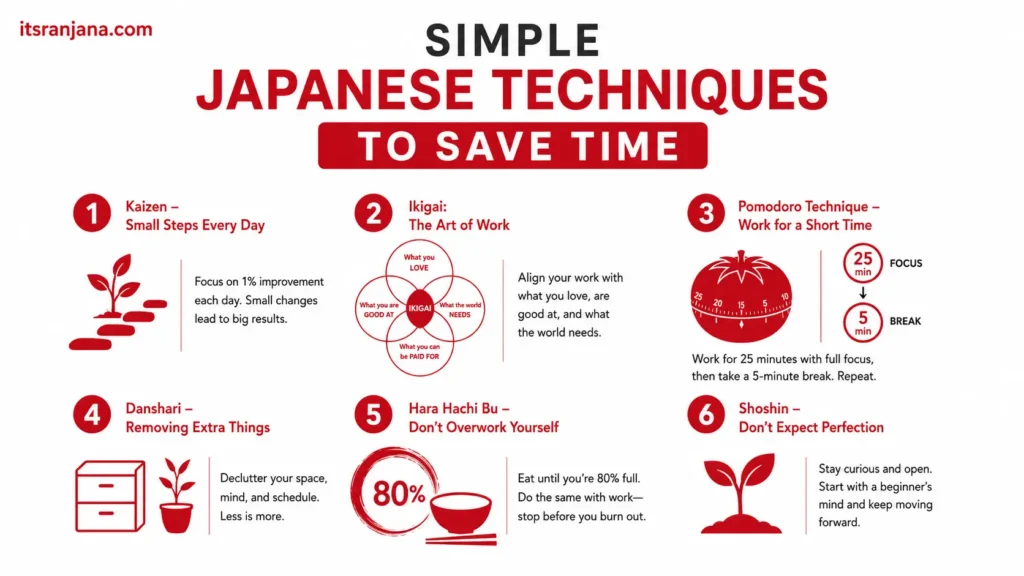
Numerous Japanese techniques are quite easy and useful. They relieve a mom of stress, save time, and prevent delays in work.
Neha also got some valuable lessons from it: Don’t do everything correctly. There are little things you can do that make life a lot easier.
Some simple Japanese techniques with examples.
1. Kaizen – Small Steps Every Day
Kaizen means:
“Improve one step at a time
Rather than doing it all at once, do little things on a daily basis.
Example:
Rather than scrub down the entire kitchen, what Neha is implementing:
- Clean Fridge today
- Tomorrow, take the time to clean one shelf.
- Don’t forget to organize the drawers another day!
Rather than folding all clothes:
- Fold clothes in 10 minutes
It is easier to work on smaller tasks, so you don’t procrastinate.
How does it help moms like Neha?
- Less stress
- Easier routines
- No pressure or rush to get things done.
2. Ikigai: The Art of Work
Ikigai means:
“Things that make you happy.”
There are many moms who only work for others and who forget about themselves.
This technique says:
Do small acts that help you to feel good. Neha is doing the same.
Example:
- Turn on the music while you are cooking
- Dance for 15 minutes
- Water plants
- View the show of your choice
- Read a book before going to sleep
How it helps Neha:
- Better mood
- Less frustration
- More mental peace
3. Pomodoro Technique – work for a short time
This method means:
Work for a period, and then rest.
Example:
- Clean for 20 minutes
- Rest for 5 minutes
- Then perform another task
Or:
- Fold clothes for 15 minutes
- Take tea for 5 minutes.
Large assignments can be accomplished in small increments of time.
What Neha is observing:
- More focus
- Less tiredness
- Stops procrastination
4. Danshari -removing extra things
Danshari means:
Only store usable items.
The more items you have, the more mess and the more cleaning.
Example:
- Donate old clothes
- Remove broken toys
- Keep fewer utensils
- Organize unnecessary items
Less stuff = less cleaning.
How does it change the life of Neha?
- Saves cleaning time
- Home feels peaceful
- Less mental stress
5. Hara Hachi Bu-Don’t Overwork Yourself
This is a technique for learning to balance.
You don’t have to do all of these daily.
Example:
If you are tired:
- Put some clothes aside for tomorrow
- One day, skip deep cleaning. One day, do not deep clean.
- Occasionally, order simple food
It’s fine to do “enough”.
What changes does Hara hachi Bu bring to the life of Neha?
- Less exhaustion
- Better mental health
- Less pressure
6. Shoshin – Don’t Expect Perfection
Shoshin means:
Slow learning is ok.
Many moms experience guilt if:
- The house is messy
- Laundry is pending
- Kids make a mess
However, it is not always possible to attain perfection every day.
Example:
Instead of saying:
“I failed today.”
Say:
It was a busy day today. I will do it again tomorrow.
Now, Neha is feeling:
- Less guilt
- More confidence
- Peaceful mind
A group of small moments to savor. Small moments to enjoy.
Why a Stay-at-Home Mom Needs a Break?
One day, when Neha was exhausted, she started crying. She knew that she had been working continuously for weeks without a break.
Constant fatigue harms the health, mood, and patience of many moms who feel guilty during rest.
So Neha began to take little breaks during the day.
- Drinking tea peacefully
- Quietly sitting for 10 minutes
- Listening to music while ironing clothes
- Taking walks to get some fresh air
These little moments improved her mental health.
Self-care is not selfish.
Happy Mom = Happy Home.
Simple Routine Ideas for a Stay-at-Home Mom
If you find your day too hectic and unplanned, these are some of the ways you can find balance as a stay-at-home mom.
- Start the Day Calmly
Don’t check your mobile right after waking up.
- Avoid cleaning the entire house every day
Use a different area per day instead.
- Keep simple meal plans
Following a meal routine saves time and reduces mental stress.
- Use Laundry Schedules
Have days for laundry.
- Involve Kids in Household Work
Even little kids can carry out simple chores.
- Take Short Breaks
Rest is a source of patience and productivity.
Neha’s Life: Before and After the Routine
| Before the Routine | After the Routine | |
| Morning | Woke up when kids called her, already stressed | Woke up 30 minutes early, had a quiet tea time |
| Energy Level | Exhausted by 10 AM | Calm and steady throughout the day |
| Housework | Tried to clean the entire house every single day | Cleaned one area per day, felt manageable |
| Meals | Decided what to cook at the last minute every day | Planned simple weekly meals, no daily stress |
| Kids & Chores | Sent kids away while working, did everything alone | Involved kids in small tasks, felt less alone |
| Multitasking | Cooked, answered calls, helped kids — all at once | Focused on one task at a time |
| Rest | Never rested, felt guilty if she sat down | Took 15-20 minute breaks, guilt-free |
| Night Routine | Slept without any preparation for the next day | Prepped bags, clothes, and breakfast the night before |
| Mood | Irritated, overwhelmed, and often cried at night | More patient, peaceful, and in control |
| Feeling at the end of the day | “I did so much, but nothing feels done.” | “I did what mattered today — that is enough.” |
| Self-Care | Zero — no time for herself | Small daily habits like music, walks, and hobbies |
| Family Atmosphere | Tense, everyone felt mom’s stress | A calmer home, kids, and husband are more cooperative |
“Neha didn’t find a perfect life. She found a better system — and that made all the difference.”
The Most Crucial lesson that Neha has learnt is…
Many months went by, and Neha’s life became normal.
But her house was far from perfect.
There were still tough days.
The kids continued to make messes around the house.
But not anymore, she didn’t.
Time management wasn’t about being perfect – it was about doing an efficient job of it.
Developing systems that make life easier is a matter.
Patience, balance, and realistic expectations.
Above all, she learned that it was a good thing to go through the experience of motherhood.
Final Thoughts
Neha was not perfect, and her house was also messy, like yours. But one smart thing that she did was time management. Now she feels more relaxed and has ample time for her family.
In short, little things can make a big difference in your daily life. Make a basic daily routine for stay-at-home moms, one that is practical for your family.
Learn how to make good use of downtime as a stay-at-home mom by concentrating on the essentials rather than doing everything.
One thing to keep in mind is that it’s easier to manage your household and kids when you don’t expect everything to do on the same time.
A peaceful home is not built on perfection.
FAQs
What is the best daily routine for a mom to stay home?
A realistic and flexible daily schedule is the best one for a home mother. Some simple tasks can help organise the day and lessen stress, including morning tasks, meal preparation, cleaning, children’s activities, and short breaks.
Slow down for overwork, do the simple things.
What do you do to keep your house clean and to raise children?
The simplest ways of managing household chores and children as a whole are to have them engage in small activities and create simple routines, and not to expect everything to be perfect at all times. Dividing work into smaller portions will also minimize stress.
What makes a stay-at-home mom so tired?
There is no end to housework for the stay-at-home moms, and they don’t have much time off. Some of the reasons for burnout include not getting enough sleep, stress, and striving for perfection.
How can moms stop procrastinating at home?
Mother has to prioritise the important task first. Moreover, if you write your daily plan, then it gives a psychological signal to your mind that you need to complete the work. Also, there are so many mobile apps available for daily tracking.
How can homemakers reduce stress daily?
Mothers get worried when they feel they have lots of work to do. But one thing you should consider is to be easy on yourself. Don’t get trapped in the game of perfection. Do only the work you can handle. You can leave work for tomorrow.